 Home
One Step Closer To Home: Amber’s Story
Working against rising rents and expensive groceries, a single mother shares how she’s conquering debt to make her family-backyard dream come true.

Afternoons sledding in the backyard. Christmas mornings in the living room. That’s the kind of home Amber M. wants to give her kids, ages 10 and 7. It’s what she had as a child, and it’s always been her dream to have a house of her own.
But for years, that dream has kept slipping out of her reach.
Despite her steady job as a paramedic and firefighter in the Washington, D.C., area, being a sole parent has complicated Amber’s path to homeownership. She brings home around $3,400 every two weeks, depending on whether she’s able to work overtime, and hasn’t gotten a raise in three years. But while her income has stayed the same, rising day-to-day expenses—groceries, her daughter’s cheer team uniforms, a two-bedroom rental that has nearly doubled in price in recent years—leave her squeezed. Having a second household salary would help, she says, but it’s all on her.
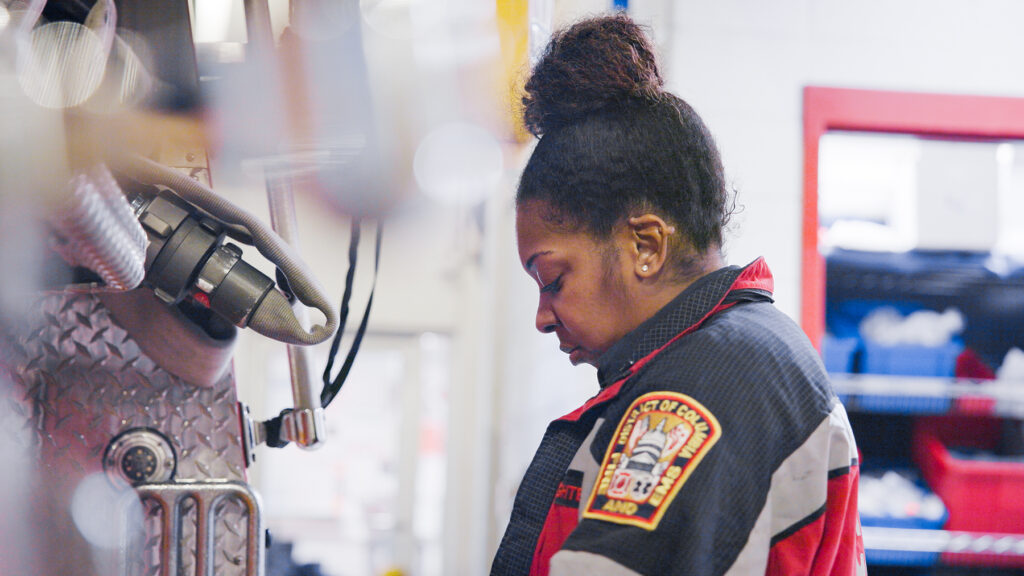
Amber, who works as a paramedic and firefighter in Washington, D.C., is searching for an affordable home close to work.
Amber has been trying to save for a down payment—about $10,000 to secure an FHA loan—but other costs keep derailing her. Last year, her finances came to a head when she needed to buy a new car just as her credit card payments increased. Amber’s experience reflects the crunch facing many households: Financial Health Network research shows more than half of Americans are spending as much or more than their income and just 41% are confident they’re on track to meet long-term goals, like buying a home.
For help, Amber turned to Opportunity Knocks, a series on PBS that pairs families with financial coaches to help them conquer financial challenges. Through Opportunity Knocks, Amber was able to consolidate her debt and make progress toward her homeownership goal. As she builds her savings, she’s also growing her financial confidence—and recognizing that financial goals don’t always follow the timeline you have in mind.
Here’s her story.
Running Toward Danger for a Living
[As a paramedic], it’s something new every single day. The academy was definitely challenging. I think there were only two other girls in my class. So just having the same expectations as men was a little challenging. But I’ve built a lot of friendships. I’ve learned so much.
[My schedule], typically it’s supposed to be 24 hours on, 72 hours off. So one week, if I work Wednesday, I don’t work until Sunday. But that, of course, varies. And then sometimes if my kids have activities, I can’t pick up overtime. So that will kind of throw my income off for that paycheck.
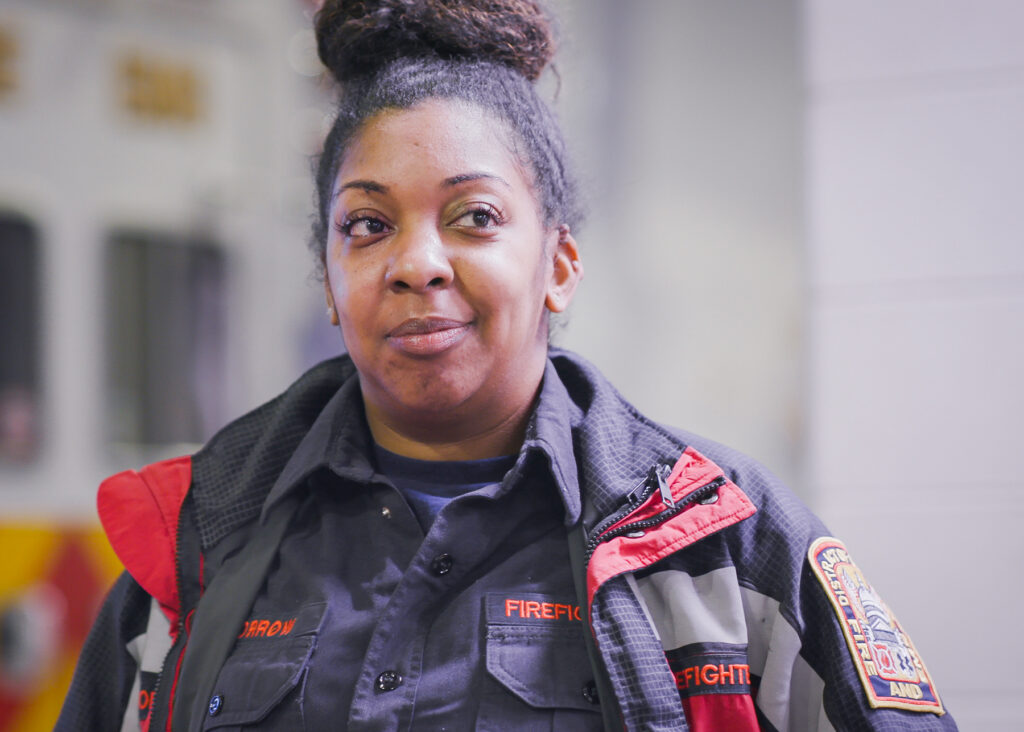
As a paramedic and firefighter, Amber works overtime when she can, but sometimes has to turn down shifts because of her kids’ activities.
Usually every two weeks, I bring in about $3,400. That’s just going to be the average standard. My rent goes up every year. It’s $2,200 now, up from just $1,200 a couple of years ago. I have a car note that’s now $529 a month; I had a lot of credit cards.
Dealing With Unexpected Costs
After the breakup with my ex, the custody battle is kind of what took me into the kind of red. I didn’t know how much the lawyer was, paying for mediation, all those fees for filing. It kind of put a big toll on my credit card balances. And then because of the salary that I make on paper and what he could report, because he’s an entrepreneur, he only has to pay $300 a month in child support. He does have the kids when I’m at work two days a week, but they’re with me 80% of the time.
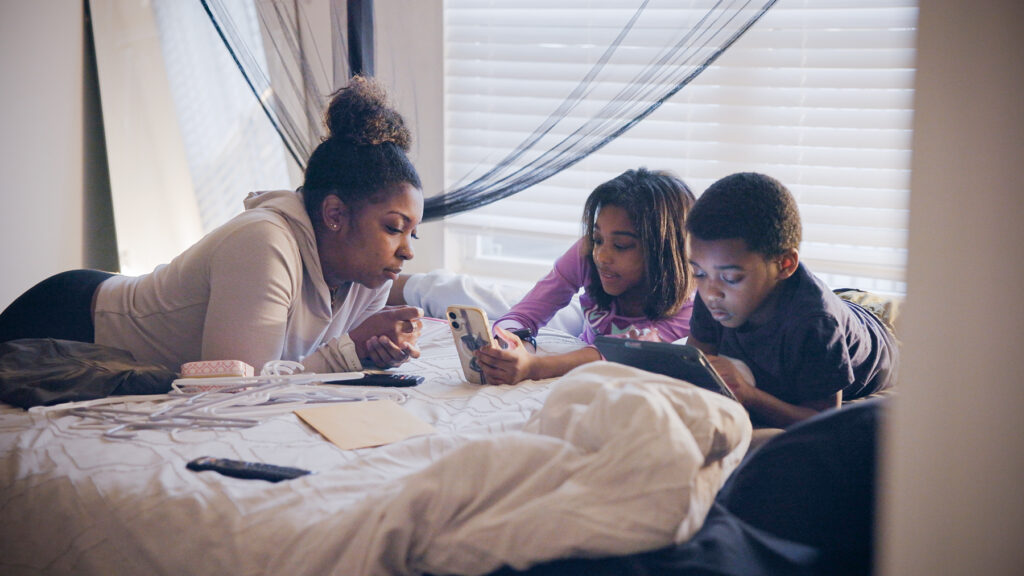
Amber often feels stretched thin by day-to-day costs, like gas, household expenses, and summer camp for her kids.
This is a very expensive area to live in, [and we must be close to the station]. Gas here is like $4. Luckily my car is small, but just little expenses like that. I would like to live in the city because of my career, but I can never even afford to live in D.C. Like if I had another person with me, of course like it would be easier, but because it’s just me, I’m working on my one salary.
We haven’t got a raise in three years, so [the union] is trying to fight for that. So just like unexpected things that happen. Like a uniform fee [for my kids] that will take me out or like summer camp, stuff like that. Or something unexpected, like getting into a car accident.

“[Owning a home] is just something that I want for my kids. I think about generational wealth and putting them ahead. I also want something to call our own. And when my kids go to college, they can come back and remember the room they grew up in.”
[When an unexpected cost happens], I don’t get my nails done, just girl things like lashes, like shopping, like I used to do. I put more of my money, of course, into my household, my kids. [I cut costs] like going to lunch by myself and splurging on food. Just being in the city; just picking stuff up and spending it. I feel like, ‘Oh my gosh, I do nothing for myself.’
The Journey Toward a Home

For Amber, buying a home is a priority to provide stability for her kids now and build wealth to pass on to them later.
Ultimately, [owning a home] is just something that I want for my kids. I think about generational wealth, of course, and putting them ahead. In any event that, you know, God forbid something happens to me, I want something to give to them. I also want something to call our own. And when my kids go to college, they can come back and remember the room they grew up in.
I remember going to pick out the house with my parents and my brother, and they were just like, ‘Well, what do you guys think about this backyard and this house?’ And it was just an experience. And my parents still own the house 30-some years later. So it means a lot to me. I think I’m the only person in my family who doesn’t own a home right now. So, yeah, I would love that for them.
I don’t even know what a starter home is anymore, because the prices have gone up so much. And then you have HOA fees and you have everything, electric, water, gas, all that stuff you pay on your own. If you have a yard, like if something gets broken in my home, my washing machine, I have to go buy that versus calling maintenance. So I think about all of that, because they’re expenses. So I don’t want to go into that, having all this debt, and then I’m in a house and I can’t afford to replace a dishwasher because I have to pay a credit card bill.

When Amber came to Opportunity Knocks, she was carrying balances on several credit cards, including one around $20,000.
Overcoming Debt To Pursue a Dream
I was car note-free for two years. Then I got into a small fender bender. And then at the same time that the credit card payment went up, I had to go buy a car, and I’m like, ‘Oh my God, I don’t know how I’m going to pay.’ Before that, I hadn’t had a car note in two years.
It just kind of felt like it was just crashing down on me at the moment. I mean I was doing it and making it. But I literally would have negative $200 at the end of my two weeks. So it just kind of felt like a never-ending cycle.
“I don’t even know what a starter home is anymore, because the prices have gone up so much. And then you have HOA fees and electric, water, gas, all that stuff you pay on your own. I don’t want to go into that, having all this debt, and then I’m in a house and I can’t afford to replace a dishwasher because I have to pay a credit card bill.”
I definitely relied on credit cards. I had one that was like $20,000. I had a small loan I took out one time. Before the show, I always paid my bills on time, but it was just the minimum [credit card payment]. I did the math so many times, and with the interest rates and paying the minimum, my debt wasn’t going anywhere.

“I always paid my bills on time, but it was just the minimum credit card payment,” Amber says. “My debt wasn’t going anywhere.”
After the [Opportunity Knocks] show, I had the consolidation loan, so I ended up paying off three of the credit cards with that. I knocked out about $11,000 in debt. My monthly debt payment was $530, and now it’s $226.
Right now, I’m working on just saving. I took a certain amount out from my check, so I’m able to automatically put that into a savings account. I’m just trying to make sure my debt-to-income ratio is as low as it can be. And trying to make sure I am at a place where I feel comfortable going into a house. I have a realtor right now, so we’re just kind of working on the finance aspect: What realistically I can afford at this moment, how much I want to pay, how much I need to put down.
This experience has taught me it’s okay to go slow, as long as you’re making progress. Like I went back to school, and I was trying to take like three classes, and then last semester I took one, and I realized how much easier that was for me to manage, because of my life, my time. And there’s no rush. Everybody’s life is on a different timeline. Everybody’s in different places.
-
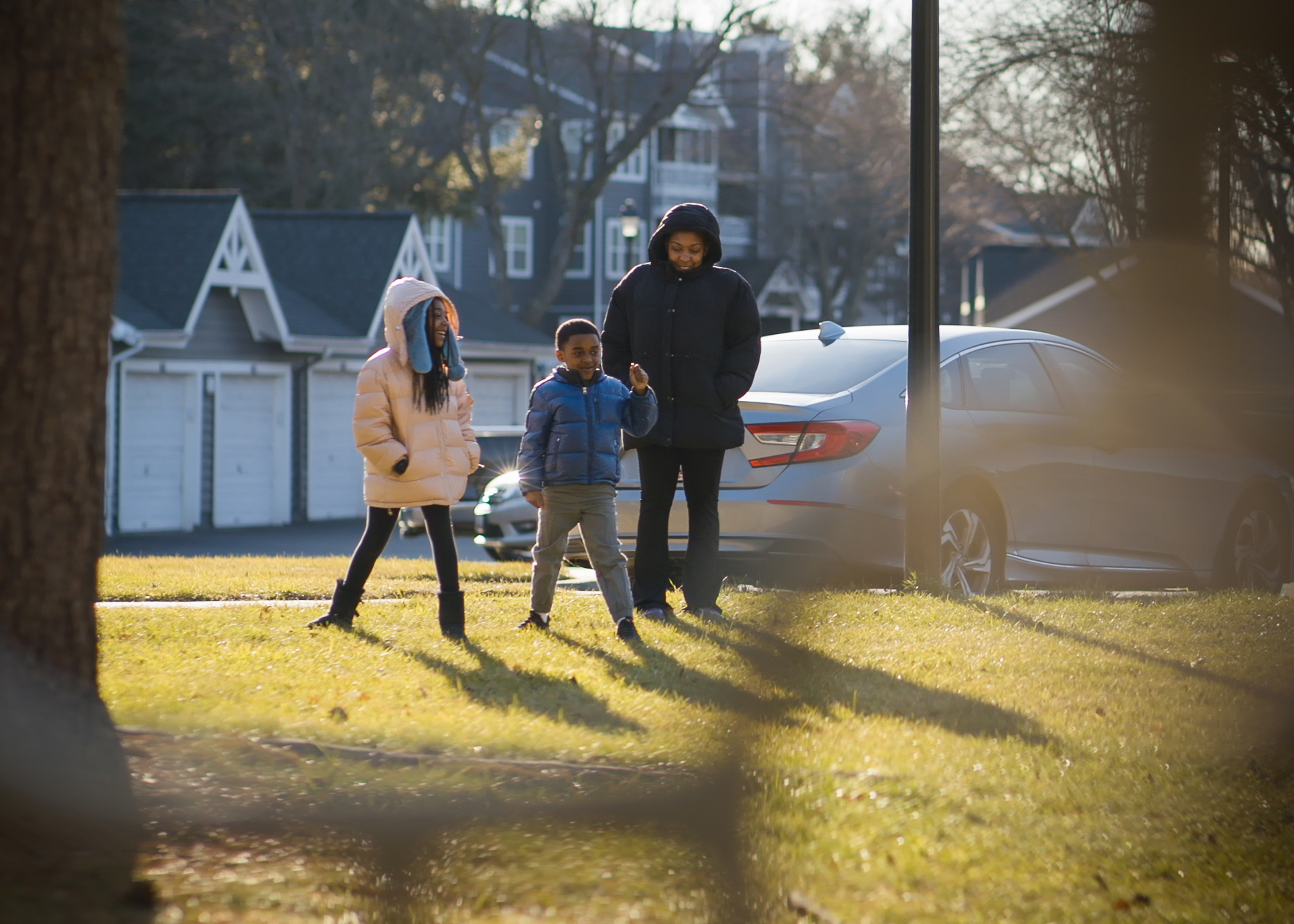
Today, Amber is saving up for a down payment and working with a realtor to find a home she can afford.
Explore More Human Stories
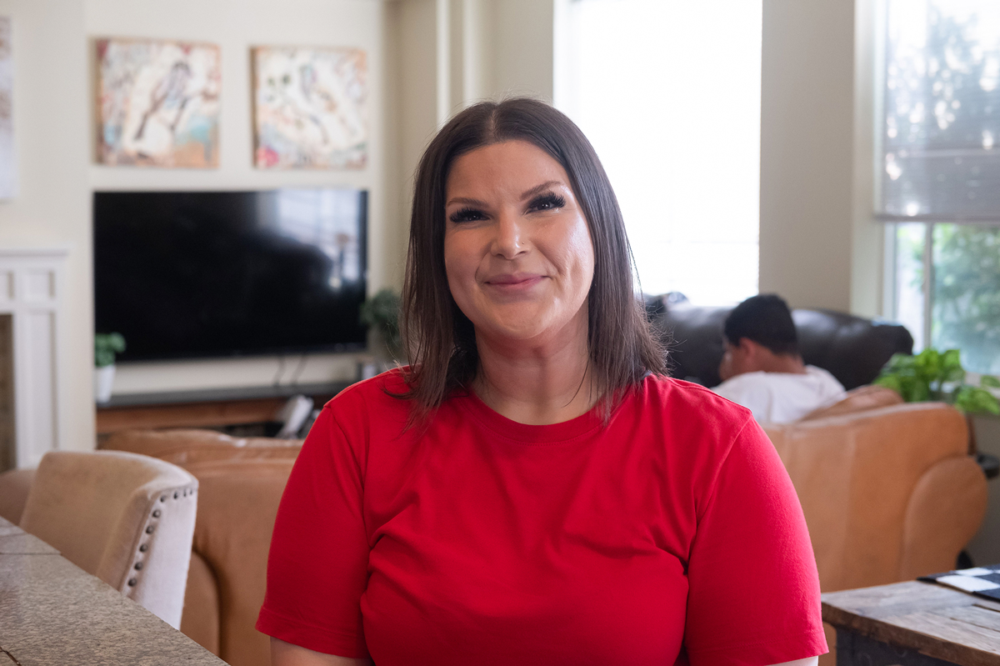
Going Into Debt To Buy Back-to-School Shoes: Ashley’s Story
Battling rising costs and caregiving demands, a single mother shares her journey away from debt and toward financial stability.
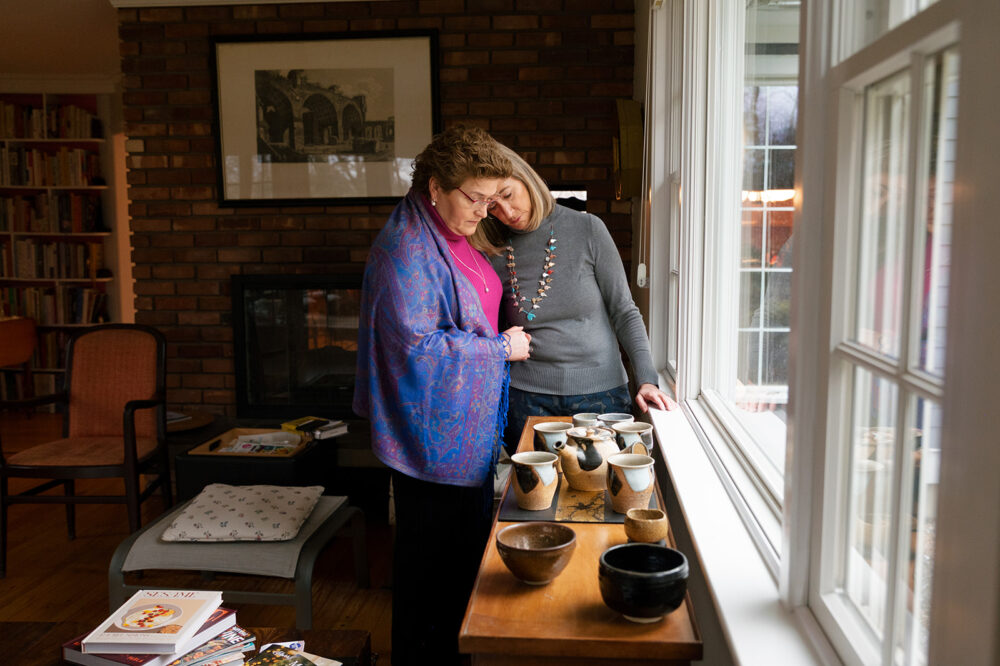
When Financial Abuse Breaks a Family: Elizabeth and Linda’s story
Two sisters recount how their mother’s decline and exploitation shattered their financial security and devastated close-knit family bonds.

From a Challenging Childhood to a Chosen Family: Yousef’s Story
On his own earlier than planned, 30-year-old Yousef faces a catch-22: not enough education for stable work, not enough savings for more education.
Explore More Research

Financial Health Pulse® 2026 U.S. Trends Report: Stressors Mount and Vulnerability Returns
New Financial Health Pulse® data show a reversal in household financial health trends, with vulnerability rising amid mounting financial pressures.
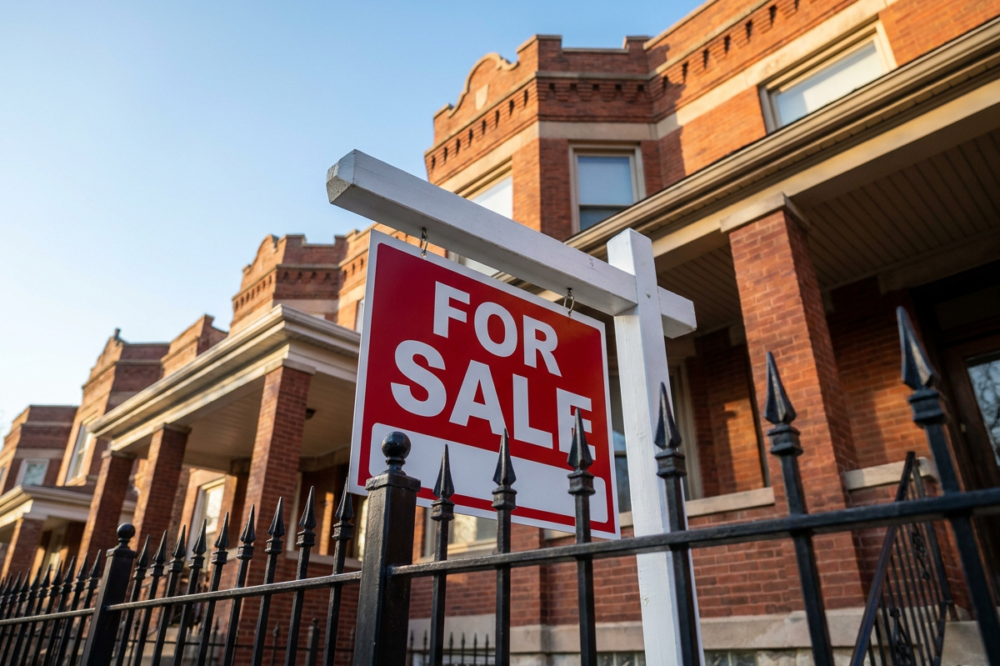
Credit-Ready but Priced Out: Chicago’s Homeownership Affordability Gap by Neighborhood
Chicago renters overwhelmingly want to own homes, but credit barriers, limited savings, and a shortage of affordable housing often stand in the way.

FinHealth Standards for Credit Cards: Designing for Young Adults
Explore the FinHealth Standards for evidence-based recommendations on designing credit cards that help young adults build stability and resilience.

Sign in to Access Your FinHealth Content
New to the Financial Health Network? Create your free account now.