 Home
HomeFrom a Challenging Childhood to a Chosen Family: Yousef’s Story
On his own earlier than planned, 30-year-old Yousef faces a catch-22: not enough education for stable work, not enough savings for more education.
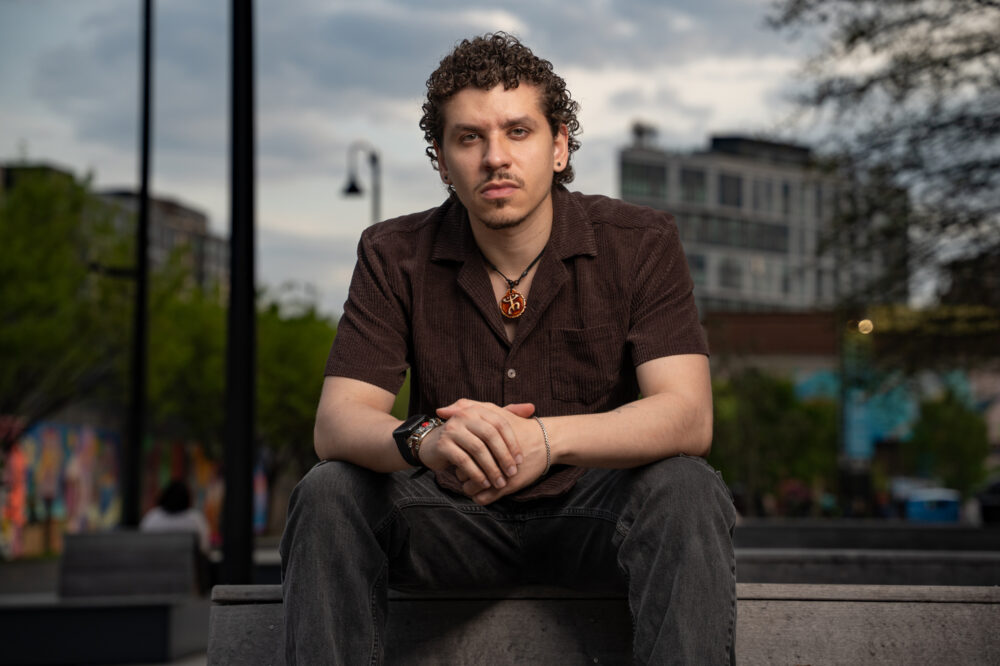
Yousef F. feels stuck in a cycle that’s tough to break. Growing up outside of Washington D.C., stability of any kind was difficult to come by.
He grew up in a turbulent household, where tensions around his queer identity made life even more difficult, and started working part-time as soon as he was legally able. When he enrolled in college, ongoing instability at home made it difficult to keep up with classes. Yousef abandoned plans to complete his bachelor’s degree, though he did earn his associate degree.
Years later, the instability remains, underscoring just how hard it can be for young adults to find solid footing when traditional support systems fail. After being faced with another layoff in the fall of 2025, Yousef faces the same predicament as many of his peers: needing more education to access higher, more stable-paying jobs while relying on work that doesn’t provide enough financial stability or income to make that possible. He also can’t rely on his family for meaningful financial support.
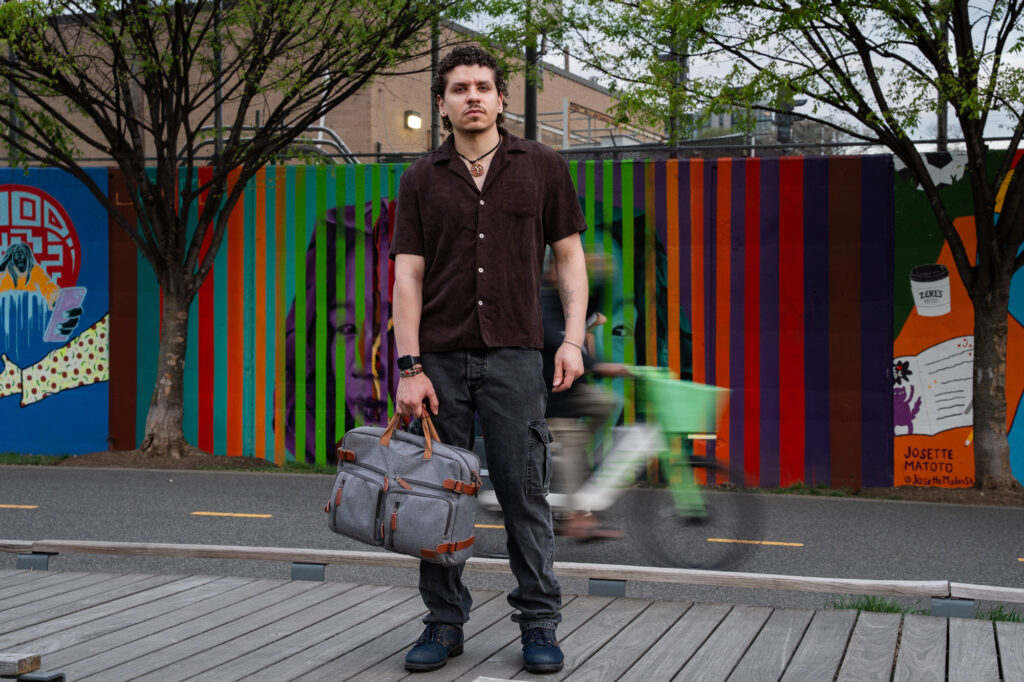
Leaving home at an early age exposed him to housing instability and limited his ability to complete his undergraduate degree.
As a younger worker, Yousef falls into a group most likely to experience higher levels of financial-related stress, according to the Financial Health Network’s research. The data also shows that financial hardship is closely tied to mental health challenges, including anxiety and depression. In addition, LGBTQ+ individuals like Yousef are more likely to experience financial vulnerability. For now, Yousef is learning new skills to make ends meet and considering leaving the U.S. to complete his bachelor’s degree in Europe, where he could attend school without incurring more debt.
Here’s his story.
Navigating Instability at Home
I grew up with four siblings in a very insular community in Herndon, Virginia. My dad drove a taxi. There was never enough clothing, never enough food.
I was homeschooled, so everyone I grew up with was from the mosque. I wasn’t exposed to other non-Muslim Americans. Growing up, I felt more Egyptian and spoke Egyptian Arabic at home. My mother is from Puerto Rico, but I mostly spoke to her in English. My parents never pressured me to assimilate, as there was an expectation we would move to Egypt at some point, anyhow.
After high school, I got into George Mason University in Virginia, but I was constantly dealing with extreme dysfunction at home. I was also working part time at a FedEx office, but it was 30 hours per week, plus school full time. My father controlled any penny that came in and out of the house. I was failing one of my classes, because I was so overcome with what I was dealing with.
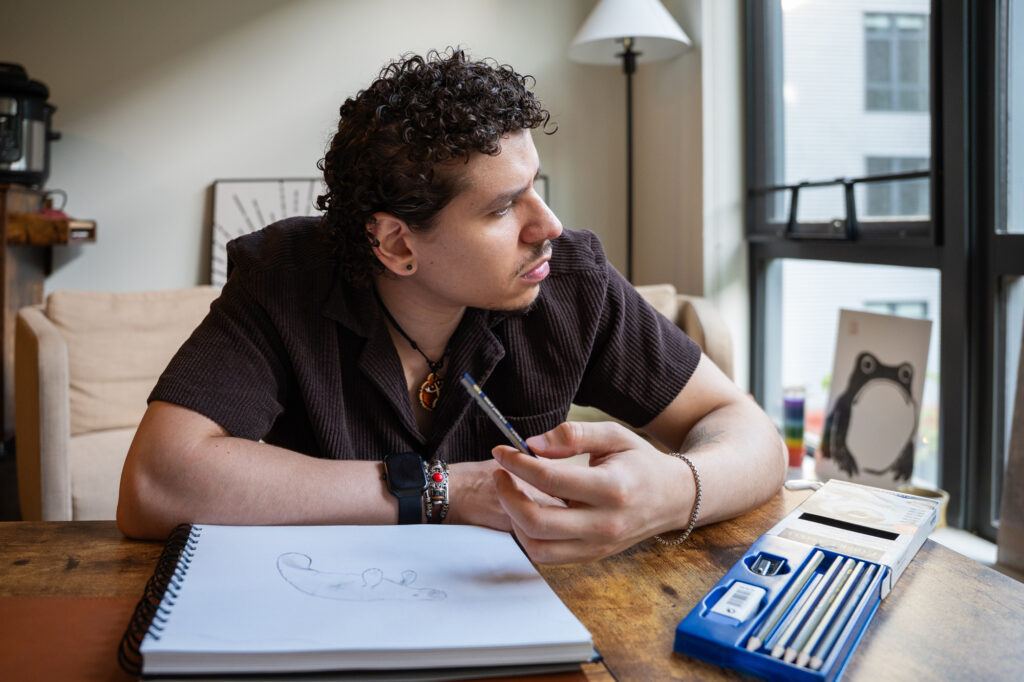
Entering a crowded job market, Yousef worries about keeping up with peers who have continued their education.
I transferred to community college, but after a couple months things really got ugly at home, and I moved out. I was homeless for two months before finding a place. I rented a room in a nearby town. I couldn’t manage it all and I ended up failing those classes, too. But I kept trying. I would attend for a semester, and then things would happen where I couldn’t go to school, and then I would return. Eventually, I got my associate degree.
I majored in computer science when I was in community college. I needed to get a career or a degree that would make me money. I don’t find computer science that interesting, but I feel like I don’t have freedom or agency to say that. It’s just a question of, ‘How can I bridge my interests and make money?’

“I feel like the whole system is rigged because the success that you have is based on where you come from…”
The Never-Ending Job Hunt
After working at FedEx, I got a job at a call center earning $40,000 per year. It was more than I had ever made before, but it was not enough to survive on my own and I had to keep renting rooms. Eventually I got my first corporate job, making a bit more money. Still, it wasn’t enough to be independent. A few years ago, I got a better-paying corporate job, making $80,000. Last year, I was laid off. It’s just a constant battle of trying to have enough money for school and trying to pay off student loans that I still have from my one year in school. I still owe over $1,000 from just two semesters I took years ago.
I’m not the only one struggling to find a job right now, but I also don’t have a bachelor’s degree, which sets me back. There are people who have 10 times the experience and certifications that I do, and they’re not finding jobs. It really does feel like a game.
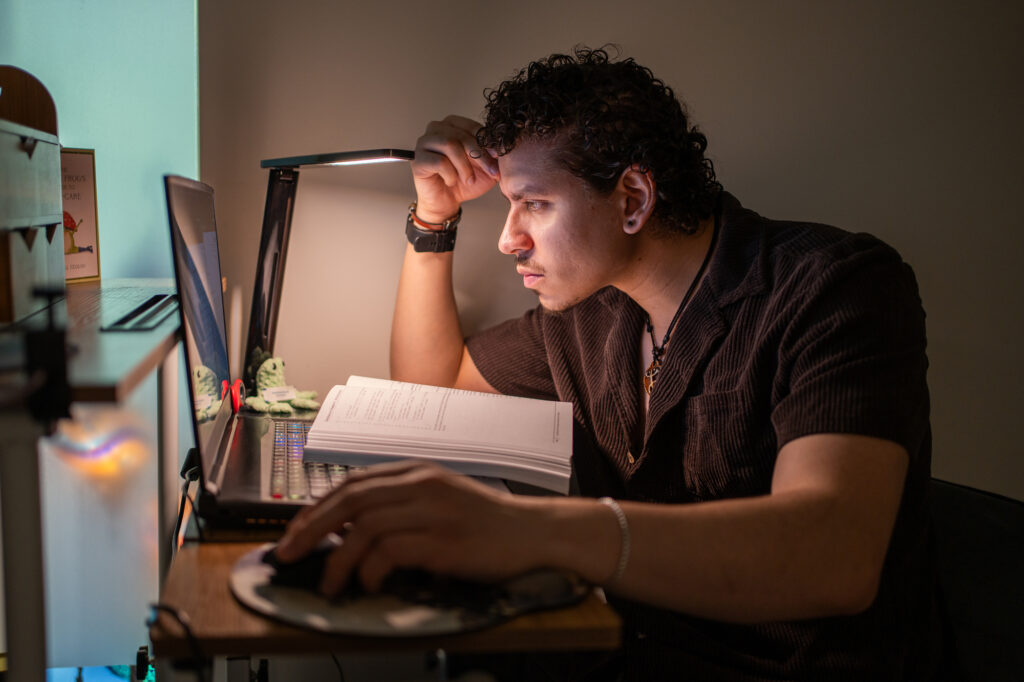
To boost his earnings, Yousef is taking a bartending course and hoping to secure a part-time job quickly.
I’m planning on learning bartending and music production with the help of some friends, so I don’t have to pay for courses with money I don’t currently have. And I have an interview for substitute teaching coming up in a few weeks. And I have money from unemployment. So those are my sources of income as I search for work. I don’t want to be homeless again; I have to make enough money to survive.
For now, I’ve managed to save enough and now live in a rent-controlled apartment of my own. I pay over $1,800 per month in Northeast D.C. I have had bad experiences with roommates in the past, and having my own space has allowed me to focus on my career and well-being.
“My support system has been my friends, who are my chosen family, in the past few years.”
The instability kind of feeds into the inability to fulfill my goals. You know, it’s hard to really sit down and do an application for something when I’m like, ‘Oh, right, how am I going to feed myself?’ And I just feel I’m on a hamster wheel and not actually getting anywhere.
The Power of Community
I see my mom and sisters frequently and talk to them often. They all live together and we are close, but I can’t rely on them completely because they are also struggling financially. My parents got divorced in 2022, and I don’t speak to my dad.
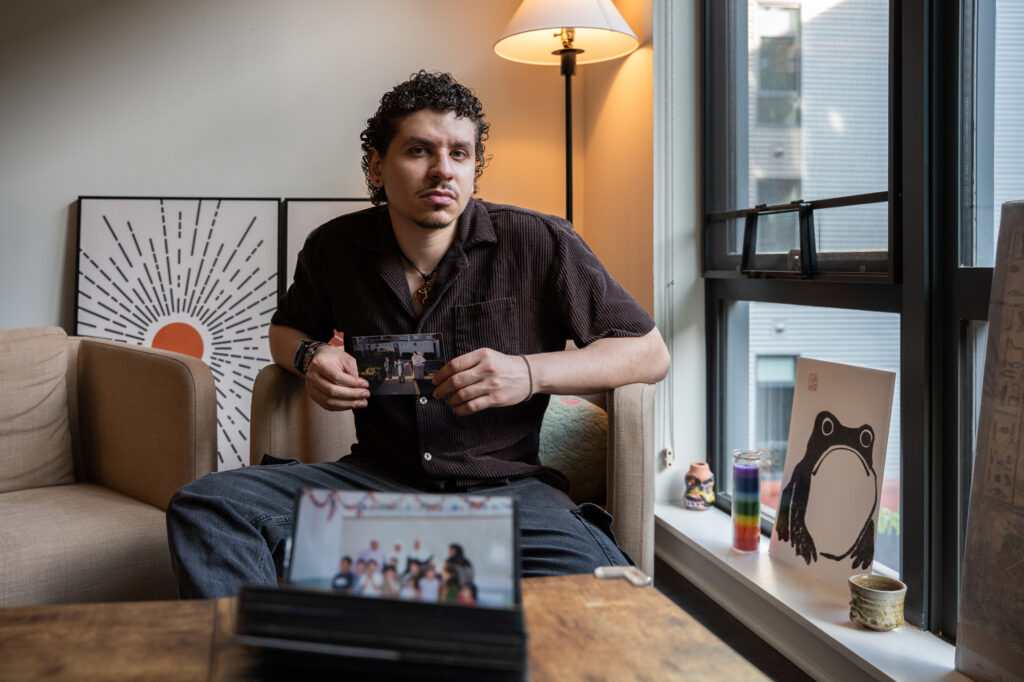
Though Yousef remains close to his mother and sisters, he cannot depend on them as a safety net.
As I look for work, quality time with my friends keeps me motivated and recharged. We often watch shows or apply to jobs together. I also love cooking for my friends. I am even thinking about culinary school, since I am in this kind of limbo with my career.
I didn’t just survive because I worked hard. It’s because I had people that I could rely on. My support system has been my friends, who are my chosen family, in the past few years. I had friends that I could stay with and save money. I had people that could help me. I also have a therapist who I adore. I like having that shared value system to really think about how we got here. That’s the only reason why I did anything. I refuse to create a narrative of luck and bootstraps as to why I’m okay.

Yousef’s friends have become his “chosen family,” supporting him through the challenges of the last few years.
I feel like the whole system is rigged because the success that you have is based on where you come from, who you are, who your ancestors are, who your family is, where you go, and the resources you had—everything that was just not there for someone like me or my family.
I’m considering going back to school in a year or two. I’ve begun looking at cheaper options in Germany, the Netherlands, or even Sweden, where I have some family and friends. Sometimes I feel that I would be able to have a healthier financial life and a healthier life in general if I just don’t live in the U.S.
Eventually, I want to do something that can help people, and give my life meaning, and be financially stable. Those are my values, and that’s what gives me hope.
-
Despite his own financial challenges, Yousef has supported his mother and sisters in the past.
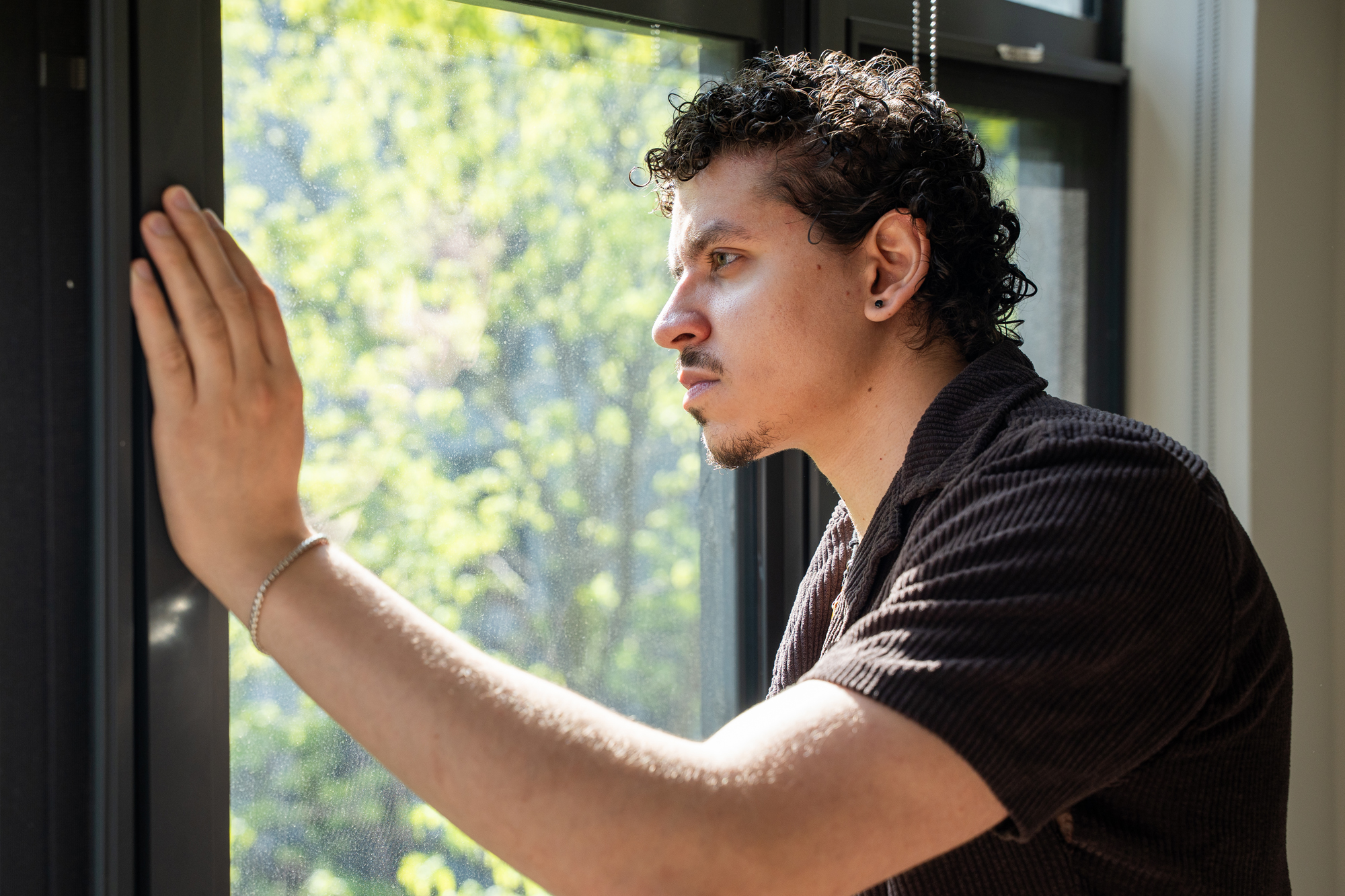
Yousef’s story illustrates how financial health is deeply intertwined across generations. Financial Health Network research reinforces the strong link between parental income and children’s economic outcomes, noting that financially secure parents can support their children’s education, housing, and career connections while avoiding dependence on them later in life. In Yousef’s case, those guardrails are missing. Beyond a lack of parental support, Yousef’s efforts to support his mom and sisters financially echo a pattern among people with higher-paying jobs who grew up in economically insecure families.
When basic needs like housing, food and healthcare feel uncertain, long-term goals such as education, career advancement, or savings can become harder to pursue for years to come. In one survey exploring the connection between financial and mental health, participants described how financial stress spills into daily life and emphasized the need for holistic solutions.
Yousef’s experience reflects those pressures. Like many young adults navigating today’s labor market, he is trying to balance immediate survival with long-term goals. He applies for jobs, learns new skills and is considering a return to school. But he still needs to ensure he can pay rent to avoid slipping back into housing insecurity. He is also among thousands considering completing his education abroad, a trend that’s grown in recent years.
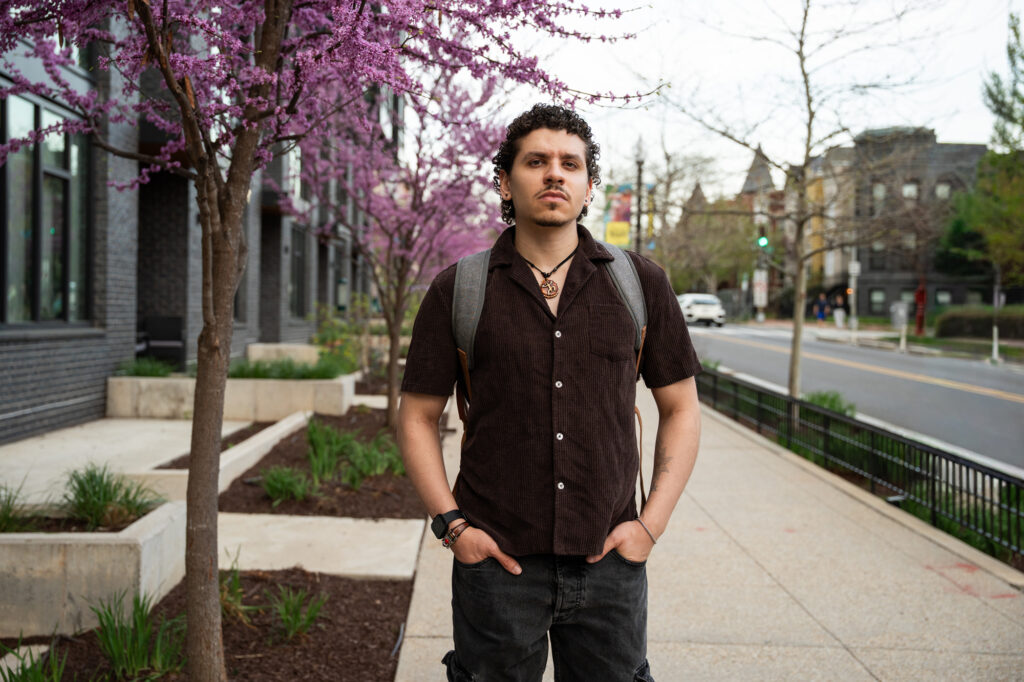
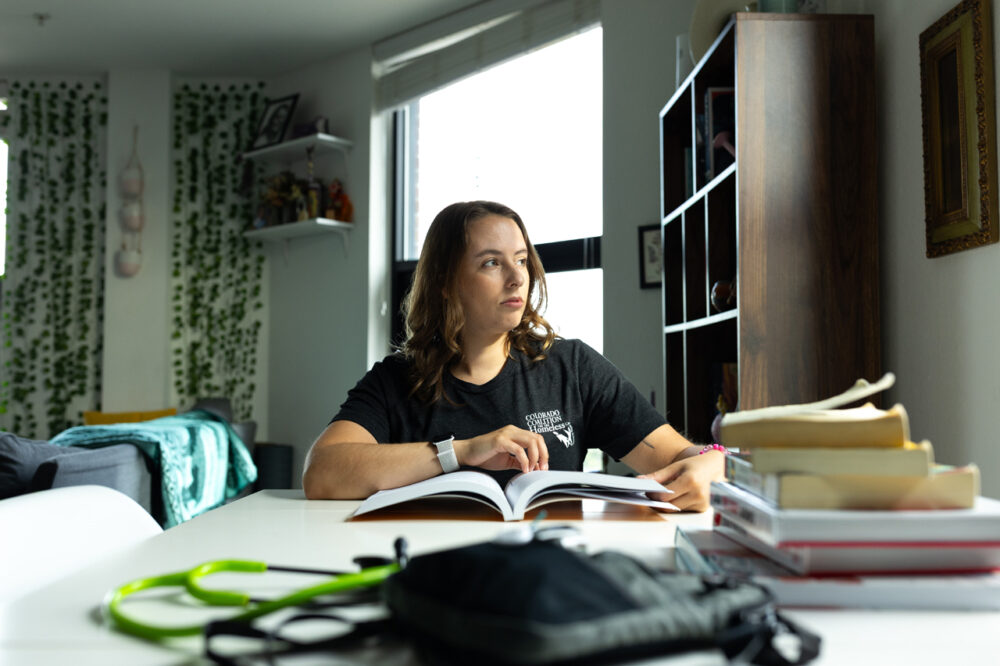
For Yousef, the constant pressure of making ends meet leaves little relief from stress.
For Yousef, navigating constant financial stress means making complex trade-offs. Going beyond the numbers to understand these types of lived experiences is critical to creating local policies, workforce training programs, and other solutions that improve financial health for all.
Thank you to Young Invincibles for their collaboration on this story. Photography credit: Nick Moreland photo
Read More Human Stories
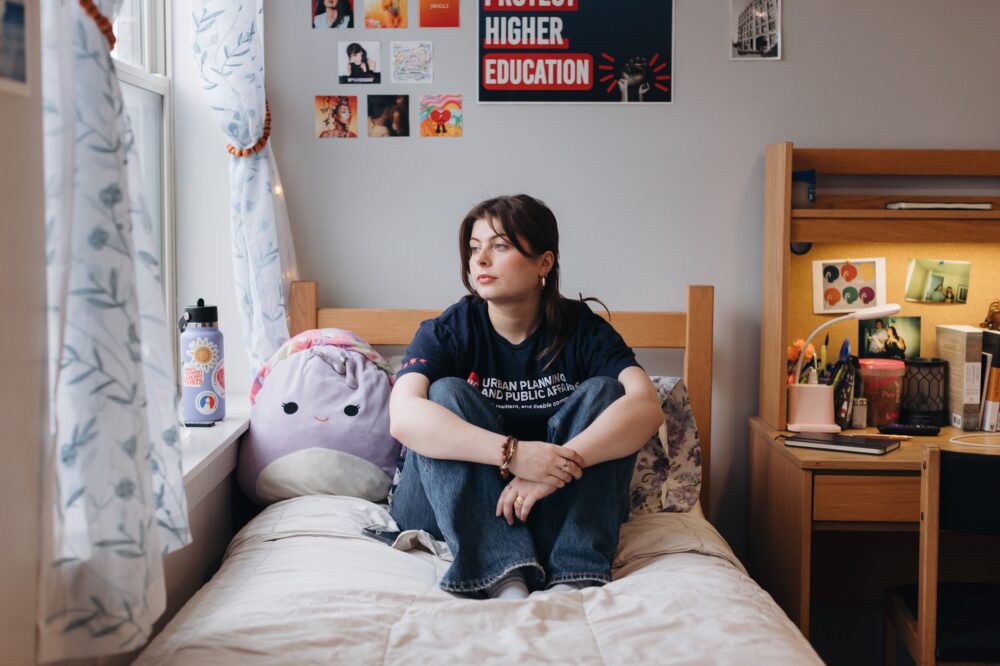
When Economic Strain Sparks Dreams of Policy Change: Margarita’s Story
Growing up in an economically diverse city showed Margarita, now a college junior, how place shapes financial destiny.
From Poverty to a College Degree: Angel’s Story
Without a financial safety net, one college graduate’s journey to a diploma was paved with setbacks and plenty of resolve.

600 Job Applications, No Offers: Zerui’s Story
After earning his master’s with honors last year, Zerui is getting by on low-wage work while he continues to apply for jobs. Still, he remains hopeful.
Explore More Research

Financial Health Runs in the Family: Intergenerational Trends and Opportunities
Family members don’t live in silos, and financial health solutions can’t, either. How can we take a holistic approach to meet every generation’s needs?

Understanding the Mental-Financial Health Connection
For the first time, we explore what's known about the deep relationship between financial and mental health challenges – and what’s left to uncover.

Financial Health Pulse® 2025 U.S. Trends Report
Our 2025 report reveals a mixed picture: modest improvements in households’ financial health in the short term and deep disparities over the long term.