 Home
HomeWhen Economic Strain Sparks Dreams of Policy Change: Margarita’s Story
Growing up in an economically diverse city showed Margarita, now a college junior, how place shapes financial destiny.

Margarita Arango, 21, grew up navigating what felt like two different cities. Some areas of her hometown of Rockford, Ill., a former manufacturing hub near the Wisconsin border, were marked by high unemployment, disinvestment, and crime. Meanwhile, other residents lived comfortable middle-class lives, often just a few blocks away. Margarita, who frequently traveled across the city to attend school, dance, and church, experienced the two economies firsthand: one with plentiful grocery stores and funded schools, one without.
Now a third-year public policy student at the University of Illinois Chicago (UIC), Margarita has the vocabulary to analyze the forces that shaped her upbringing. She sees similar disparities in the financial experiences of residents across Chicago’s diverse neighborhoods. Financial Health Network research shows that households in the West, South, Far South and Southwest parts of Chicago are significantly less likely to be Financially Healthy than those on the North, Central and Northwest sides, mirroring longstanding patterns of disinvestment, segregation, and unequal access to wealth-building resources.

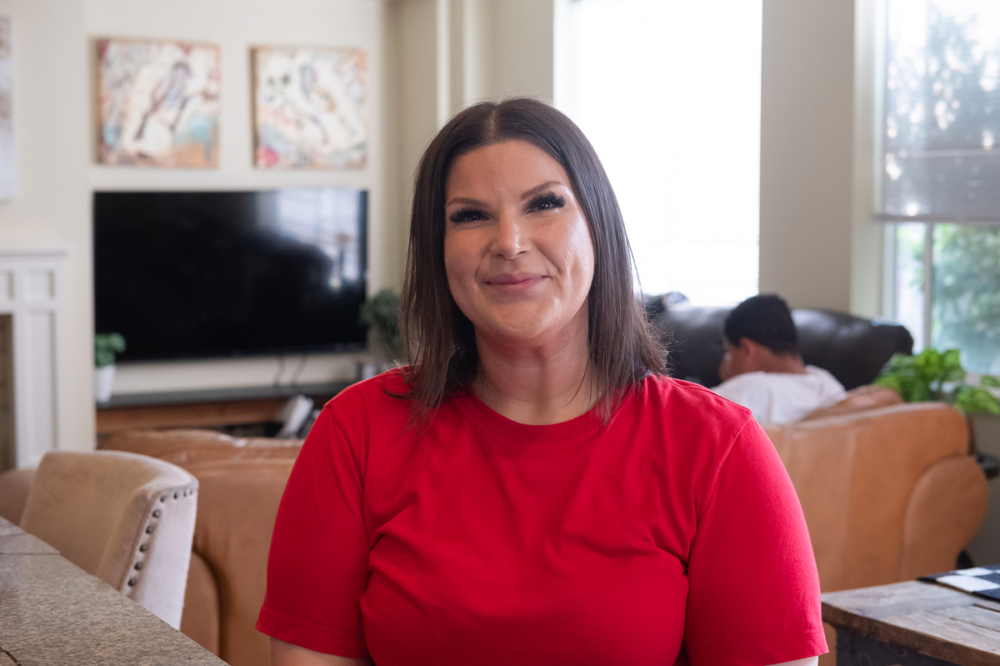
Margarita is working towards a degree in public policy.
Despite earning a full-tuition scholarship, Margarita works hard to make ends meet. She spends hours each week seeking aid to cover fees and living expenses, relying on local food pantries, and navigating applications for SNAP and Medicaid to close budget gaps. After college, Margarita aspires to a career in public service to help ensure that financial stability isn’t dictated by zip code.

“My parents did a really good job of covering up how much we were struggling financially.”
I was in my high school’s gifted program, and we remained really separate from the rest of the school. All the Mexican kids knew each other, and all the Black kids knew each other. But not many of them were in my classes. We had lunch together and could speak Spanish, which I learned from my dad, and just hang out. It really made me want to go to a more diverse college, and UIC fits that bill.

Even with a full scholarship, Margarita must track her finances closely to get by each month.
My parents were explicit about college being a big cost that wasn’t going to happen for me unless I figured out how to afford it. My mom was the sole provider, and my parents did a really good job of covering up how much we were struggling financially. At some point, we did file for bankruptcy. I didn’t realize that until I was doing the FAFSA for my freshman year of college in 2022. Our total family income was right around $50,000.
Making Ends Meet
I’m at the University of Illinois in Chicago entirely on a scholarship. I had a 4.0 when I graduated high school, so I have a scholarship that covers my tuition, room, and board. What I’m left to pay for is the fees. I live in the apartment-style dorms. I have to pay for my own groceries now, but I get to live by myself.

Margarita witnessed economic disparities while growing up in Rockford, Ill. Years later, the experience shaped her choice of a college major in Chicago.
I’m majoring in public policy and minoring in urban studies. Something that we talk about in class is economic and racial disparities, especially focusing on Chicago. It’s been interesting that I had this experience growing up in Rockford as well. I can put a name to it now. I look at my community back home and here in Chicago, and I see where the gentrification is happening or where disinvestment has been.
Now that I’m on my own, I’m checking my bank statements all the time. Sometimes I forget that I have to buy shampoo, and then it’s an extra $20, or I need to buy dish soap. And that’s a little bit more expensive than just going to the grocery store and buying lentils for a few bucks.



I have a spreadsheet, tracking when my pay period is and how much I expect to make on my payday. I work as an ambassador for the College of Urban Planning and Public Affairs at UIC. I have calculations to predict how much money I’m going to have in my account by a certain day, and how much I have left after I’ve paid for these things.
I have another spreadsheet for all my groceries. It shows my food plans and what I have on hand and what items need to be used up. I have another page of the spreadsheet that’s dedicated to what I want to make and what ingredients it will require. I color code it by what I already have and what I would need to buy, so I don’t need to buy as much.
My goal now is just to spend as little as possible and see where I can go from there. I have found now that looking at my spreadsheet and obsessing over it isn’t really helping me if I’m already spending as little money as I can. For a while I was pretty strict and obsessive.

Without ongoing college debt, Margarita is considering applying to graduate school.
Navigating a Fragmented Benefits System
I signed up for our food pantry already, and that’s something that I’ve been to a few times. The last time I was there, they ran out of milk and then they ran out of eggs. I have not been eligible for SNAP in the past, but I would like to apply now. When I applied for SNAP, they were including my parents’ income in my application, and there’s no way to establish that I am not living with them in this household right now unless I change my permanent address.
“My goal now is just to spend as little as possible and see where I can go from there.”
-
Margarita has struggled with applications for Medicaid, but now receives public assistance.

The financial tightrope Margarita walks each day is familiar to many households in Chicago and beyond as they navigate growing costs of living and reduced access to public benefits. Yet even as Margarita lives paycheck to paycheck, she feels fortunate to plan for graduate school without incurring debt. That places her in a relatively small group: Financial Health Network research shows that just 20% of U.S. households report having no debt. In Chicago, the percentage of borrowers who are 30 or more days behind on their debt rose to 29% in 2025 from 26% in 2022. In addition, more than 1 in 5 households are Financially Vulnerable, exceeding national averages.
Still, there are signs of progress.
Fewer Chicago households are reporting financial vulnerability in 2025 compared with three years prior, including a decrease in vulnerability among Latino households. Shifts in local policies, like the ones Margarita aims to create one day, have contributed to some of that movement.

As a college student in Chicago, Margarita must navigate rising living costs with few safety nets.
Looking ahead, cities like Chicago and Rockford can address persistent financial health disparities by highlighting needs at a hyperlocal level. From food assistance to support with public benefits navigation, targeted solutions informed by stories like Margarita’s are key for improving financial health for all.
Thank you to Young Invincibles for their collaboration on this story.
Read More Human Stories
Going Into Debt To Buy Back-to-School Shoes: Ashley’s Story
Battling rising costs and caregiving demands, a single mother shares her journey away from debt and toward financial stability.

When Financial Abuse Breaks a Family: Elizabeth and Linda’s story
Two sisters recount how their mother’s decline and exploitation shattered their financial security and devastated close-knit family bonds.

From a Challenging Childhood to a Chosen Family: Yousef’s Story
On his own earlier than planned, 30-year-old Yousef faces a catch-22: not enough education for stable work, not enough savings for more education.
Explore More Research

Financial Health Pulse® 2025 Chicago Trends Report
The 2025 Chicago Trends Report finds that financial vulnerability in Chicago has declined slightly since 2022, signaling resilience amid ongoing economic pressure. This place-based analysis shows that while stark neighborhood disparities persist across wealth, homeownership, and financial stability, targeted solutions can build on pockets of resilience.

Financial Health Runs in the Family: Intergenerational Trends and Opportunities
Family members don’t live in silos, and financial health solutions can’t, either. How can we take a holistic approach to meet every generation’s needs?

Financial Health of Workers in Low-wage Jobs
Our findings suggest that investing in the financial health of workers in low-wage jobs – defined as earning up to $17 per hour in hourly wages or up to $35,360 per year in annual wages – can be an effective strategy for employers to ensure a stable and productive workforce.