
Small Dollar Credit and Financial Health: A Policy Perspective
The Financial Health Network wrote this Policy Perspective that draws on our past small-dollar credit work to inform the conversation around recent regulatory actions.

Comment Letter: Small-Dollar Lending
The Center for Financial Services Innovation responds to the FDIC’s Request for Information on Small-Dollar Lending based on our research into the consumer behaviors, products, and providers that comprise the market for small-dollar credit.

Secured Credit Cards: Military and Veteran Service Members
Active military members have more consumer debt and lower self-reported credit scores than civilians, but secured credit cards can limit service members’ financial vulnerabilities.

Secured Credit Cards: Rural, Underserved Communities
Americans in rural communities are losing access to locally available, affordable financial services and products.

The Financial Health Network Comment Letter to the CFPB’s Request for Information Regarding Use of Alternative Data and Modeling Techniques in the Credit Process
The Financial Health Network submitted its response to the CFPB’s request for information regarding use of alternative data and modeling techniques in the credit process on February 16, 2017. In the letter, the Financial Health Network acknowledges that the use of alternative data in the credit process poses both risks and benefits to consumers. The letter also states the Financial Health Network’s belief that consumers will be better able to achieve financial health if they have access to innovative credit products that are safe, affordable, and of high quality, enabling them to manage their day-to-day finances, weather financial shocks, and pursue longterm opportunities.

The Financial Health Network Comment Letter on Payday, Vehicle Title, and Certain High-Cost Installment Loans
The Financial Health Network is submitting this letter in response to the request for comments on “Payday, Vehicle Title, and Certain High-Cost Installment Loans,” issued by the Consumer Financial Protection Bureau (CFPB) and published on July 22, 2016.
Case Study: Moving Beyond APR: How Oportun Re-Imagined the True Cost of a Loan so Customers Can Thrive
In partnership with the Financial Health Network, Oportun, a community development financial institution, have set about to understand and demystify the cost of credit that consumers face.
Financial Solutions Lab – Helping Americans Weather Financial Shocks
The 2016 Challenge topic of the Financial Solutions Lab is Helping Americans Weather Financial Shocks. This issue brief introduces the topic, the reasons it is an important problem to solve, and some innovative approaches to doing so.

Designing for Financial Health: Stories and profiles from the Financial Capability Innovation Funds
We can educate consumers and provide access to financial products and services. But how do we help consumers use their knowledge and tools to improve their financial behavior and become financially healthy?
Case Study: Strengthening Ties with Communities: Nix Neighborhood Lending
Discover how Nix Neighborhood Lending has made a lasting impact on its customers in South Central Los Angeles by providing a variety of credit services to this vulnerable group.
2014 Underserved Market Size: Financial Health Opportunity in Dollars and Cents
This report reveals that financially underserved American consumers spent $138 billion in fees and interest revenue in 2014, generated from a volume of $1.6 trillion in financial activity.
“LIFT-UP” by National League of Cities
LIFT-UP (Local Interventions for Financial Empowerment through Utility Payments) is a multi-city initiative overseen by the National League of Cities’ (NLC) Institute for Youth, Education, and Families designed to provide financial counseling to delinquent utility customers
“VITA Credit Builder” by Mission Economic Development Agency
In 2010, Mission Economic Development Agency (MEDA) launched its Volunteer Income Tax Assistance (VITA) Credit Builder program with the primary goal to establish or improve credit for low-income Latino immigrants and help them responsibly manage credit over the long term.
“LIFT” by Filene Research Institute
Filene’s LIFT (Lower Interest For Timeliness) program offered interest rate reductions to borrowers who made timely loan payments.
“Just Right” Small-Dollar Credit Products by Center for Community Self-Help
Center for Community Self-Help’s (Self-Help) “Just Right” line of small-dollar credit (SDC) products was designed to test features of SDC products offered to clients as affordable and safe credit options.
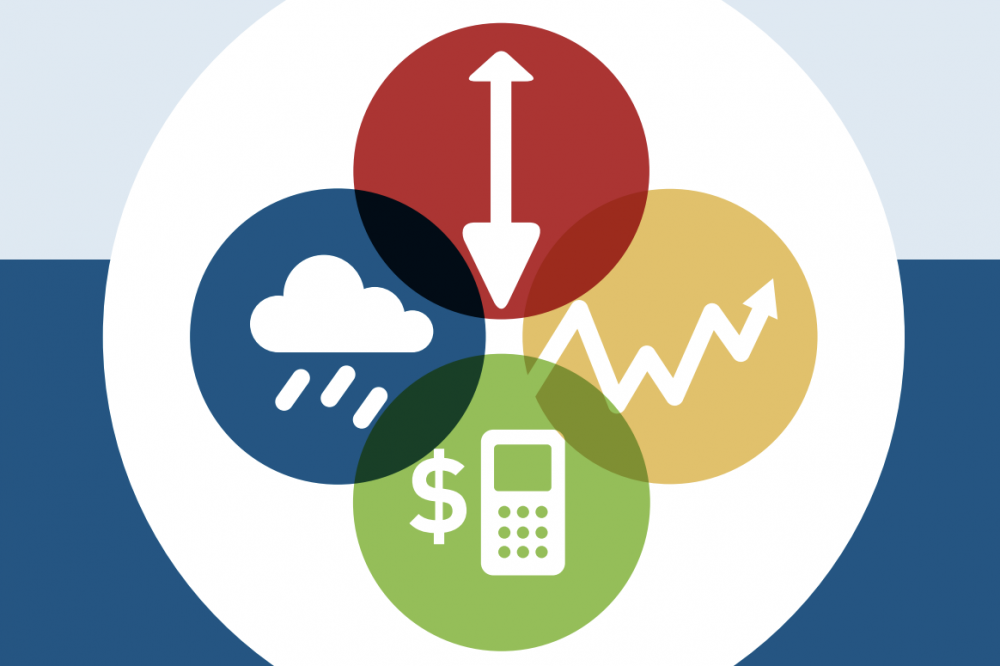
Infographic: Why Consumers Turn to Small-Dollar Credit
This infographic illustrates the types and uses of Small-Dollar Credit products.
A Snapshot of Quality and Innovation Among Small-Dollar Credit Installment Lenders
Millions of Americans lack access to high-quality, affordable credit. While innovating in the small-dollar credit industry poses challenges, the opportunity to serve borrowers in need of high-quality, small-dollar loans is significant.

“Lending Circles” by Mission Asset Fund
Mission Asset Fund’s (MAF) Lending Circles provides a zero-interest loan to help consumers build credit and access an affordable small-dollar loan.

Designing High-Quality, Small-Dollar Credit: Insights from the Financial Health Network’s Test and Learn Working Group
Millions of Americans lack access to high-quality, affordable credit. Many of the small-dollar loans available to consumers are high-cost, low-quality products that often lead borrowers into a cycle of repeat usage and mounting debt.
A Financial Solutions Lab Brief on Household Cash Flow Challenges
This brief explores the challenge of household cash flow challenges, its impact on financial health, and the opportunity for innovation.
Coming Up Short Infographic
Over 100 million Americans encounter difficulty managing their household cashflow. This infographic illustrates some of the challenges these households face and describes how the Financial Solutions Lab can help to improve their financial health.
The Financial Health Network Comment Letter on Department of Defense’s Military Lending Act
The Financial Health Network believes that access to high-quality financial services is necessary for consumers’ financial health.
2013 Financially Underserved Market Size
This report reveals that American consumers spent $103 billion in fees and interest revenue in 2013, generated from a volume of $1.3 trillion in financial activity.
One-Page Overview of the Compass Principles
To help the industry take the lead in addressing these challenges and build trust with the public, the Center for Financial Services Innovation, in partnership with a cross-section of industry participants, created the Compass Principles.

Design Matters – Learning from Consumers Experiences with Small-Dollar Loans
Reliable access to high-quality small-dollar credit (SDC) is vital to the financial success of millions of U.S consumers.
U.S. Financial Diaries: An Invisible Finance Sector – How Households Use Financial Tools of Their Own Making
The U.S. Financial Diaries (USFD) is an ambitious research project first-of-its-kind undertaken in the U.S. The project is collecting detailed financial data from more than 200 low- and moderate-income households over the course of a year.

The Compass Guide to Small-Dollar Credit
Millions of Americans do not have access to small-dollar credit or only have access to high-cost, low quality small-dollar credit products that too often lead them into a cycle of repeat usage and mounting debt.
Infographic: 2013 Financially Underserved Market Size
The underserved represent a vast opportunity for financial services providers to meet consumer demand for high-quality products that support financial health.

Know Your Borrower – The Four Need Cases of Small-Dollar Credit Consumers
An increasing number of Americans are turning to nontraditional credit sources for quick access to cash.
Financially Underserved Market Size Study 2012
The United States financially underserved market generated $89 billion in fees and interest in 2012, representing growth of 8% from $82 billion in 2011.
Investment Activity in Fintech for the Financially Underserved
This report examines the significant volume of recent investment activity in the FinTech market for financially underserved consumers. This consumer finance segment is a dynamic and growing space.
Bridging the Gap with Social Loans
Based in San Francisco, Mission Asset Fund (MAF) is a nonprofit organization dedicated to helping low-income, financially excluded consumers enter the mainstream financial system.
H&R Block – From Tax Prep to Tax Plus
Since 1955, H&R Block has been known as the go-to company for income tax advice and tax return preparation.
The Financial Health Network Comment Letter on OCC’s Proposed Deposit Advance Products
There is no one-size-fits-all credit product. Credit products are important tools for consumers’ financial management, but they need to be matched with the needs of the consumer.
2011 Underbanked Market Sizing Study
Banks and credit unions can and should be doing much more to support consumer credit building – and, importantly, they can do so in ways that align their own success with the success of their customers.

A Complex Portrait- An Examination of Small-Dollar Credit Consumers
Every year, millions of American consumers use small-dollar credit (SDC) products for quick access to cash.
Justine PETERSEN Case Study
This case study explores Justine PETERSEN. As a leader in microenterprise development and credit building, Justine PETERSEN emphasizes credit building as an empowering asset.
New Underbanked Market Data from Core Innovation Capital and the Financial Health Network
The products and services that cater to the needs of financially underserved consumers are big business.
Results from the Financial Health Network’s Inaugural Industry Scan
In 2010, the Financial Health Network launched its largest effort yet to catalog all existing financial products and services aimed at the underbanked population: the Underbanked Industry Scan.
The Financial Health Network Third Secured Credit Cards InBrief
The Financial Health Network led a consumer research study on secured card products, conducted with MasterCard and Blue Flame Consulting.
The Financial Health Network Second Secured Credit Cards InBrief
The current economy has spawned renewed examination of the market potential for secured credit cards.
The Financial Health Network First Secured Credit Cards InBrief
The Financial Health Network led a consumer research study on secured card products, conducted with MasterCard and Blue Flame Consulting.

How Should We Serve the Short-Term Credit Needs of Low-Income Consumers?
Almost one-third of the 30 million U.S. households who are unbanked or underbanked borrow to pay for small-dollar, short-term needs.
The Impact of Innovation – MACED Learning Brief
There are few affordable short-term, small-dollar credit products in the marketplace that meet borrowers’ immediate needs and that help put them on a path toward financial prosperity.
The Impact of Innovation – the Financial Health Network Learning Brief Overview
An estimated 30 to 40 million American households are financially underserved. They lack access to the financial products and services that enable them to save, build assets, and achieve financial prosperity.
The Impact of Innovation – CBA Learning Brief
A credit score affects virtually every aspect of a person’s financial life—from buying a home or starting a business to the interest rate on credit cards.
InBrief on the Underbanked Consumer Study: Characteristics of Latino Un- and Underbanked Consumers
This the Financial Health Network inBrief analyses the financial attitudes and behaviors of the 20.6 million Latino underbanked consumers in the U.S.
Preferences and Usage of Financial Services Providers inBrief
This the Financial Health Network inBrief provides some insights on underbanked consumers’ preferences and usage regarding financial service providers. The information is drawn from the 2008 the Financial Health Network Underbanked Consumer Stud.