 Home
HomeGoing Into Debt To Buy Back-to-School Shoes: Ashley’s Story
Battling rising costs and caregiving demands, a single mother shares her journey away from debt and toward financial stability.
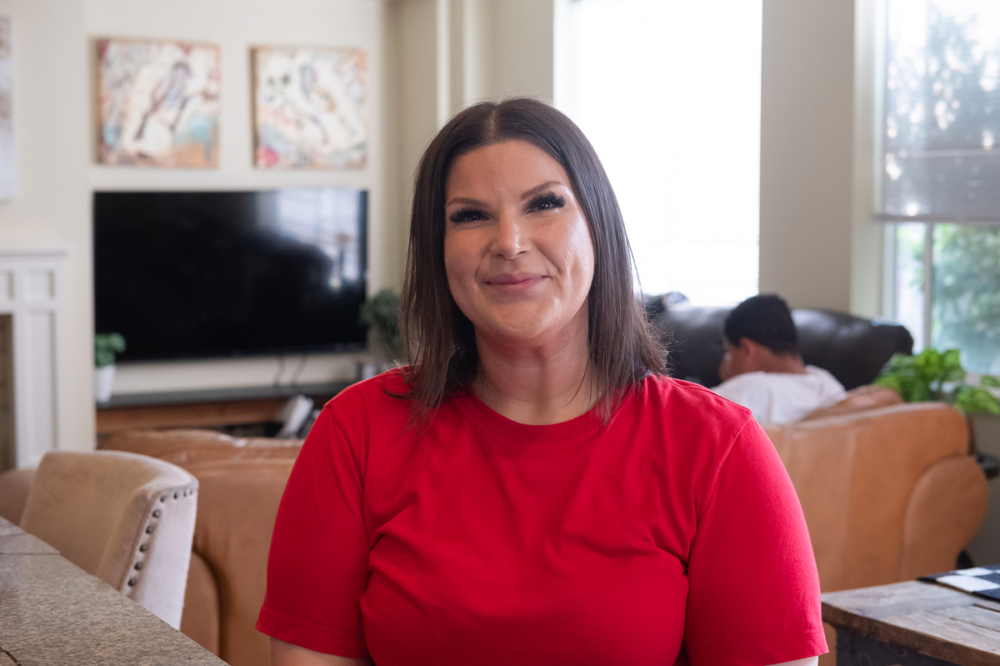
Ashley Coté tried to keep up with the bills, but the unexpected costs kept popping up for her family of three. $200 for shoes for her 11-year-old son, who’s already wearing men’s sizes. The $1,100 fee after he made the basketball team. The medications not covered by Medicaid for her younger son, who has Level 3 autism. The ever-rising costs of gas where she lives in Washington state, some of the highest in the country.
Debt shouldn’t keep you up at night, but for Ashley, it’s been a journey to get to more restful evenings. As a single mom, Ashley supports her boys without any financial help from their father. She works full-time in medical billing at University of Washington Medicine and has gotten creative to make ends meet, from taking on gig work to moving in with her mother to split household costs.
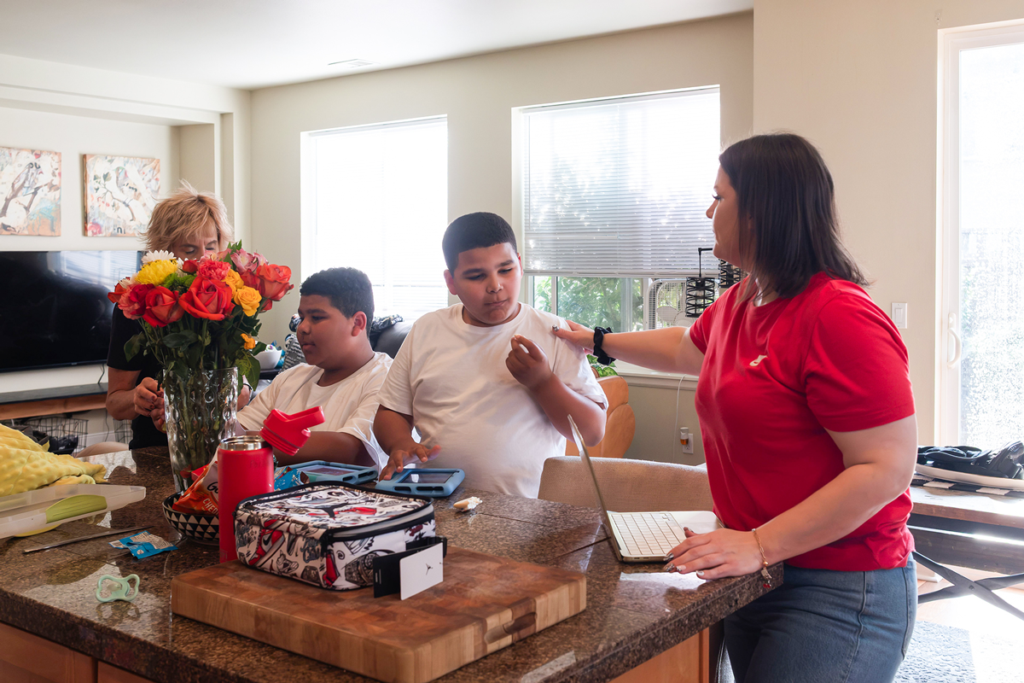
Ashley’s mother moved in with them to help care for her two boys, one of whom has Level 3 autism.
Despite her efforts, Ashley has fought to keep her head above water financially while juggling her family’s needs: caring for her mother after she had a stroke, moving to a more expensive school district with extra resources for her son, taking off work for his medical appointments. Relying on credit became a way to cover day-to-day essentials like groceries, medications, and after-school activities for the kids. But over time, her debt spiraled from modest to unmanageable—leaving Ashley sleepless and wondering how to dig her way out.
Ashley is one of millions of Americans struggling under the financial and mental weight of debt. Financial Health Network research shows that 29% of U.S. households reported their debt was unmanageable in 2025, up from 25% in 2021. So-called “secondary nontraditional workers” like Ashley, who work extra jobs on the side, are more likely to struggle with debt: 41% of them report unmanageable debt, compared with 31% of traditional workers. Beyond the financial toll, our research finds that people who hold unsecured debt, like credit cards, experience greater depressive symptoms.
After going through Opportunity Knocks, a series on PBS that pairs families with financial coaches to help them build better financial lives, Ashley was able to consolidate her debt and is now working her way toward financial stability. Yet many of the pressures that pushed her into debt in the first place remain.
Here’s her story.
I am a 37-year-old single mom of two. I have an 11-year-old son, Ryder, and a 9-year-old son, Parker, who is on the severe end of the autism spectrum, ADHD, nonverbal, with aggressive tendencies. So things are pretty difficult, from day to day.
My parents have been a big help for us. I actually rent a home with my mom. We moved into a better school district for Parker, because I was really struggling in school with him. But it’s just been kind of a struggle, too. I’m a single mom. I don’t have a college degree. Since moving, our expenses have been just way higher.
With Parker, we’re going to therapy several times a week. I drive him to and from those appointments. Just having autism in general, like that’s at least one or two appointments a month. With Seattle Children’s, I try to get Zoom appointments as much as possible just to cut down on travel time and costs. Parker’s [also] on medications. He does have Medicaid because of his SSI status. But a lot of times, Medicaid doesn’t pay for the medication, because of his age. I’m paying out of pocket for that.
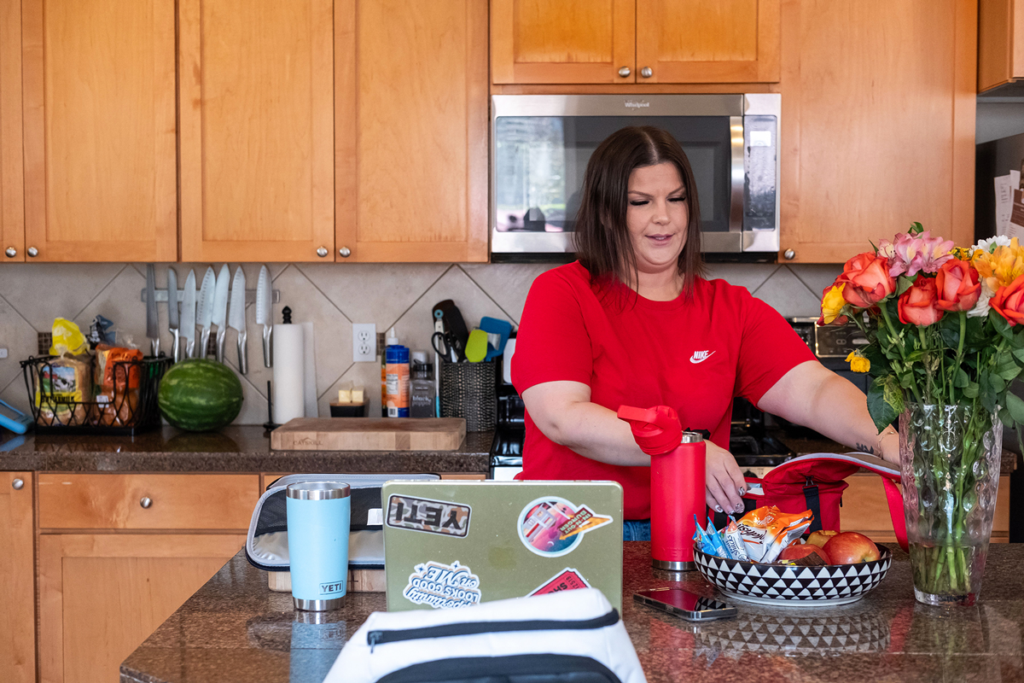
“I quickly realized with the gas prices and the groceries and back-to-school and summer birthdays, [my] work just wasn’t … getting me through,” says Ashley, who works three jobs to make ends meet.
[I’m] also just trying to give my older son a normal life. I have to put him in sports and have extracurricular activities, so he feels like he’s not missing out on things. It’s just really expensive.
The last surprising cost was the basketball team. My son didn’t want to try out because he was like, ‘Well, I don’t want it to be really expensive for you to pay.’ And I’m like, ‘Don’t worry about it. If you make the team, I’ll figure it out.’ So he tried out, and then we got the message two days later, ‘He made the team. And here’s how you pay $1,100.’ And I’m like, ‘Oh my God.’ So I had to reach out to the director and say, ‘I’m a single mom. Is there any way I could split the payments up?’ We made it happen. But still, it’s a lot.
Juggling Full-Time Work and Side Hustles
I was hired at the University of Washington in 2018. I really wanted to get that job because a state job comes with benefits, a pension, things like that. My kids were pretty young at that point, and I counted on my parents a lot to watch them and take them to and from daycare. At that point, they were only paying me like $20, $22, an hour. And it still wasn’t enough. I have diapers and stuff to pay for.
-
Ashley takes her son Parker to therapy several times a week.

-
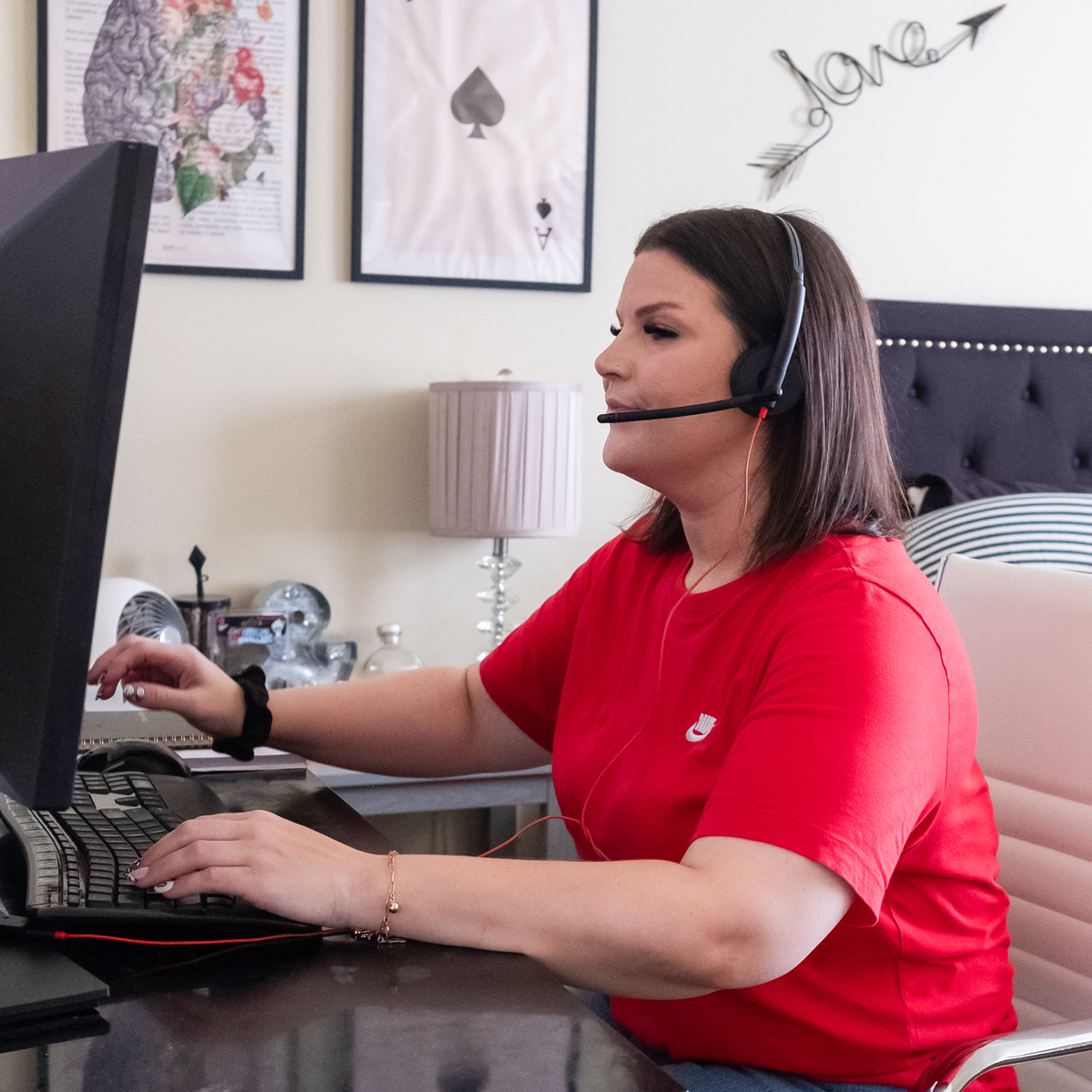
Working from home has given Ashley the flexibility to manage her son's doctor appointments.
-
Ashley and her mom moved to a better school district for Parker, which has come with higher costs.

After being on the team for a year, I was promoted to lead. So then I got another boost in pay. Now, after taxes and deductions, I bring home about $4,400 a month. But I finally topped out. And so I can’t make any more money unless I move up the chain again. But I’m not willing to give up my work-from-home status to be a supervisor at this time, just because of where I’m at with Parker and his journey. It’s not something that I can risk.

“Things are going up, like gas is $6 a gallon now…. I don’t qualify for any kind of help from the state of Washington. They say I make too much money. So I’m just going to try and work harder and make more money.”
I had one really severe predatory loan with a 178% interest rate. When I took out that personal loan, it was back-to-school. My 11-year-old has size 11 men’s shoes. And so, a pair of shoes is $200. So I took that loan out just to help with back-to-school costs and school supplies and stuff.
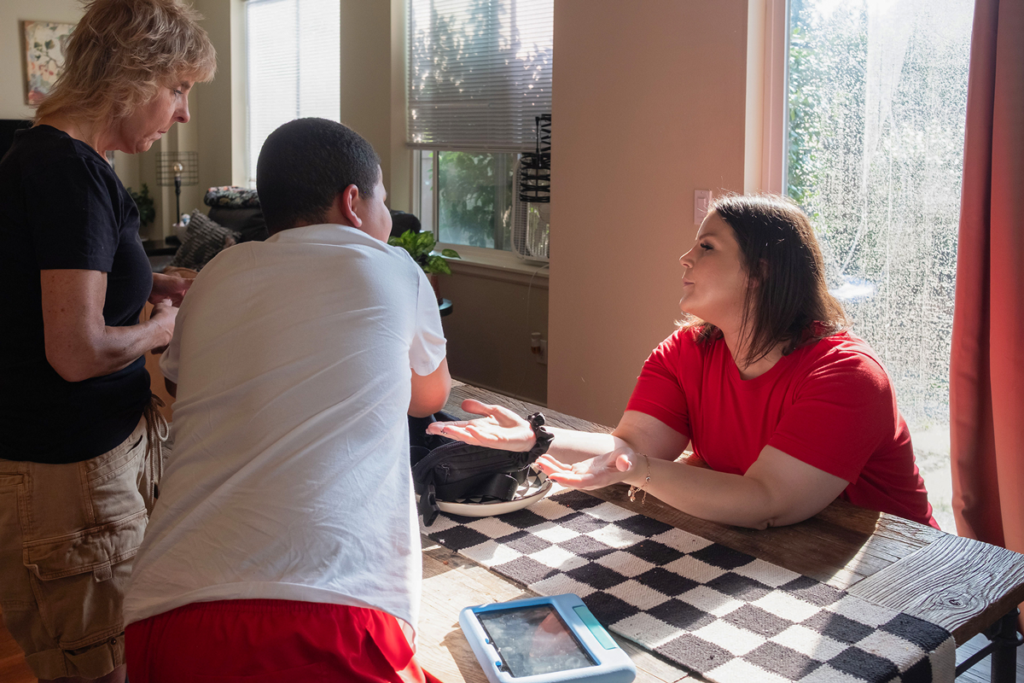
Ashley had $11,000 in debt when she came to Opportunity Knocks, including a predatory loan with a 178% interest rate.
It wasn’t until I got in touch with the show that they started to help me break these numbers down. I really didn’t understand interest rates and credit scores. And I was just going for whatever would approve me, honestly, just because I needed the money.
I didn’t realize that it was 178% APR or whatever until I was sitting with the coach from Opportunity Knocks. And he was like, you would never be able to pay this off. Like, you would just be paying on this for years and years and years. And I was honestly shook.
“I honestly couldn’t sleep before because I’m like, ‘Oh my gosh, I have a payment coming up in two days. I don’t have the money to cover it.’”
-
"One thing I want other people to know is, don't feel embarrassed or ashamed that you're going through this," Ashley says. "[I wish] our system was more set up to help those who are struggling."
Explore More Human Stories

When Financial Abuse Breaks a Family: Elizabeth and Linda’s story
Two sisters recount how their mother’s decline and exploitation shattered their financial security and devastated close-knit family bonds.

From a Challenging Childhood to a Chosen Family: Yousef’s Story
On his own earlier than planned, 30-year-old Yousef faces a catch-22: not enough education for stable work, not enough savings for more education.

When Economic Strain Sparks Dreams of Policy Change: Margarita’s Story
Growing up in an economically diverse city showed Margarita, now a college junior, how place shapes financial destiny.
Explore More Research

FinHealth Standards for Credit Cards: Designing for Young Adults
Explore the FinHealth Standards for evidence-based recommendations on designing credit cards that help young adults build stability and resilience.

Pulse Points: Disparities in Credit Scores and Length of Credit History
How is credit history related to race and ethnicity, and what steps can financial service providers take to address credit health inequities?

The Gender Gap in Financial Health
The Financial Health Network’s research has consistently shown a sizable gap in the financial health of men and women. Moreover, recent data found that while financial health improved overall for the country during the pandemic, the gap between men and women actually widened.