Impact Story

Economic Education Center of Excellence: Building Hawaii’s Financial Future

After learning most Hawaiians weren’t Financially Healthy in a Financial Health Network report, Chaminade University launched an initiative to build prosperity in the region through culturally responsive programs.
By Financial Health Network

Wednesday, August 5, 2026
 Economic Education Center of Excellence: Building Hawaii’s Financial Future
The Opportunity

Systemic Issues Call for Systemic Solutions

While reading the Financial Health Network’s 2019 report on the financial lives of Hawaiians, Guanlin Gao, Ph.D., discovered a statistic that stuck with her: 69% of adults in Hawai’i were struggling financially. These challenges weren’t isolated incidents; they reflected the realities of high living costs, income volatility, and economic conditions unique to the islands. 

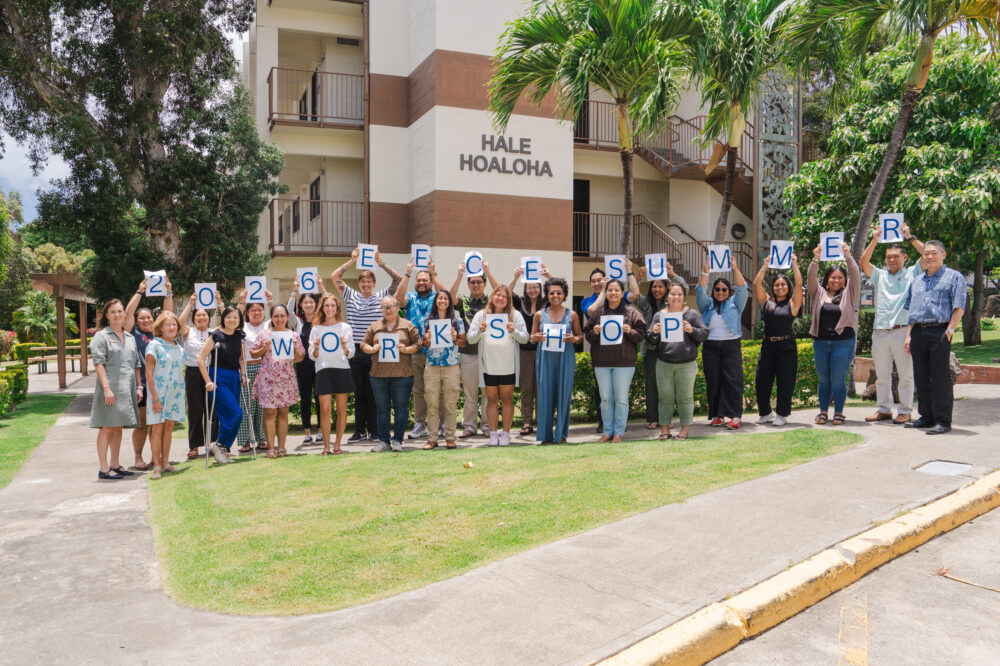
That research helped lay the groundwork for Gao, an economics professor, to launch the Economic Education Center for Excellence (EECE) at Chaminade University in Honolulu. Since 2021, EECE has worked to advance prosperity and economic justice in Hawaii and the U.S.-affiliated Pacific through integrated economic education, teacher training, and financial health research. 

Rather than applying a one-size-fits-all approach to financial education, EECE develops culturally responsive programs rooted in the lived experiences of Hawaii’s educators, K-12 students, and community members. The center also conducts place-based research to better understand the various barriers and opportunities that shape financial health and economic mobility throughout the region. 

Quote

“Place-based work must begin with listening, deeply understanding community needs, building long-term relationships, and involving the community throughout the research and program development process. This work takes time. Our goal is not to study these communities, but to understand, serve, and develop programs with and for them.”

Guanlin Gao, Ph.D
Director, Economic Education Center for Excellence

Today, EECE is working to advance financial health across Hawaii through K-12 teacher training and student financial literacy programs in local Title I after-school programs. Whether working with teachers, students, or community partners, EECE is guided by one core belief: Financial health solutions are most effective when they’re designed alongside the communities they serve.

The Impact

“Teach One Teacher, Reach 100 Students”

Before launching EECE, Gao and her team first spent time listening closely to community needs and connecting with local partners who shared their vision. In particular, EECE worked to better understand the lived experiences of Native Hawaiian, Pacific Islander, Asian American, and mixed-race communities—perspectives often missing from national financial health conversations. 

Like many new academic centers, EECE faced limited staffing and resources at first. To drive the greatest impact, the center focused on scalable programs like teacher training, student engagement, and community partnerships. Since 2021, EECE has empowered nearly 100 teachers with the knowledge they need to teach economics and personal finance, with the potential to reach nearly 32,000 students over time. 

Quote

Taking the economics class was truly transformative, both personally and professionally. It deepened my understanding of key economic concepts… but more importantly, it challenged me to view economics through a broader, more human-centered lens.” 

EECE Program Participant, 2025

Today, EECE’s teacher training programs serve educators from O’ahu and the Neighbor Islands across all grade levels and subject areas. Program evaluations show strong gains in teacher confidence, with the majority of participants moving from low to high confidence in teaching economics and personal finance. Educators describe the training as practical, engaging, and immediately applicable in their classrooms. 

EECE is also expanding what we know about financial health through place-based research in Hawaii and North Carolina. By examining how culture, family, community, and trusted sources of financial information influence financial health, the center is helping build the case for financial education rooted in community experiences.

Key Outcomes

    • In 2025, EECE equipped 30 teachers with economics and personal finance instruction 
    • Teacher confidence in teaching personal finance rose from 11% to 94% 
    • Teacher confidence in teaching economics rose from 0% to 78%
    • Educators represented 19 elementary, middle, and high schools across Hawai’i, including schools on O’ahu, Maui, Kaua’i, and Hawai’i Island
Partnering With the Financial Health Network

Adopting a Place-Based Approach to Financial Health

EECE’s partnership with the Financial Health Network has been instrumental in strengthening and refining its place-based approach to financial health. Through access to relevant research, measurement tools, and other frameworks, the center continues to refine its place-based approach while connecting local insights to the broader financial health movement. 

Measurement has been a cornerstone of that effort. EECE has incorporated the FinHealth Score® as a concise, evidence-based strategy to measure financial health across multiple dimensions. By incorporating the Score into its research, the center is connecting local data with broader trends to examine how financial literacy, culture, and local context influence financial health outcomes. 

Ongoing collaboration with Financial Health Network researchers has also strengthened EECE’s work. In particular, the center has worked closely with Financial Health Network researchers on survey design and research methodology to ensure its findings are both locally grounded and nationally relevant.

Quote

“A systemic issue calls for a systemic solution. Our goal is to bring perspectives that are often underrepresented in personal finance research into national conversations and generate evidence that can inform more culturally responsive, place-based financial education programs.”

Guanlin Gao, Ph.D.
Director, Chaminade Economic Education Center for Excellence

That collaborative spirit extends to EECE’s local partnerships as well. Beyond institutional support from Chaminade University, EECE has forged collaborations with HawaiiUSA Federal Credit Union Foundation and many other organizations to help bring its vision to life. “It is not an exaggeration to say that EECE would not exist without strong community support,” Gao says. 

Looking ahead, EECE is working to secure multi-year funding to expand financial education training, especially as new personal finance education requirements for high schoolers take effect in Hawaii. The center also continues to build the next generation of financial health leaders through student training and mentoring and is refining its research agenda. Ultimately, EECE’s goal is to translate place-specific findings into practical tools, policy insights, and community-rooted programs that can strengthen financial health for households in Hawai’i and shape national practices.

Work With Us

Take Your Financial Health Solution Further

As the leader of the financial health movement, the Financial Health Network partners with companies to catalyze solutions that drive real change in people’s financial lives. We bring deep industry expertise, powerful measurement and testing capabilities, and an extensive network to help organizations develop financial health innovations that work. Request a consultation with our team to explore how we can work together.

Explore Partnership Opportunities

Explore More

Financial Health Pulse

Hawaii Financial Health Pulse: 2019 Survey Results

The majority of Americans are struggling financially – and the everyday economic reality is similar for those who live and work in Hawaii. The Hawaii Financial Health Pulse offers an in-depth view of their financial struggles and coping strategies, along with potential solutions to improve financial health across Hawaii and the rest of the country.