Blog

What Does the Financial Future Hold for Gen Z?

Our 2026 summer intern class weighs in on the future of work, financial stability, and the impact of technology on their definition of success.
By Patrice Graham

Wednesday, September 2, 2026
 What Does the Financial Future Hold for Gen Z?

Generation Z—those born in 1997 or after—has been in the spotlight as their entry into the workforce collides with the arrival of mass AI tools, a shaky economy, and rising costs. They have come of age during successive periods of economic volatility, from 2008’s Great Recession and housing bust to the COVID-19 pandemic. 

These defining events have shaped not only their financial situations—for example, less than half of adults between 18 and 25 have three months of emergency savings, the lowest of any age group—but also their views on everything from job loyalty to what financial success looks like. 

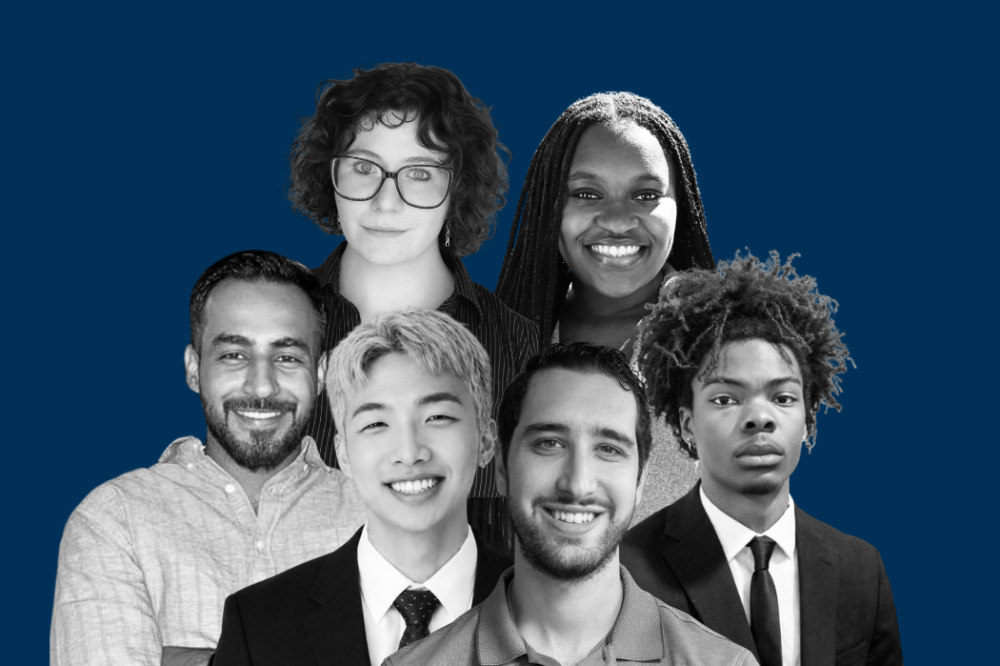
So what does their future hold when it comes to work, earning a living, and building their own financial health journeys? This summer, Financial Health Network hosted six interns who are currently completing undergraduate and graduate studies and will be entering the workforce in the next year. We asked them about some of the stereotypes facing their generation, as well as their hopes for their own financial futures. Here’s what they said.

On Working

In a time where layoffs are constant and the job market is getting harder to enter, many young adults don’t feel confident about their role in the workplace. 

In media coverage, Gen Z’s career choices are often mischaracterized as self-centered, individualistic, or hedonistic. But our interns said perceived “job hopping” or establishing firmer work-life boundaries is about self-preservation in an increasingly unpredictable labor market, not a lack of loyalty.  

Quote

“[We] very much want to be successful, want to earn money, have commitment—but we want to do it smartly, not like how other people have done it previously.”

Anees Amjad

“I don’t think that there’s a lack of commitment, [but it seems] a lot of companies value us as disposable or expendable,” says Linda Robinson, an undergraduate student at Barnard College. “They’re looking for the next best thing.” 

Vincent Giacalone, a graduate student at the University of Chicago, had already worked at three companies before he started his master’s in business administration. He echoes the same sentiment about the challenges facing his generation as they enter the workforce. 

“You can get fired, or your role can get replaced with a single email. Having any sort of loyalty to anybody beyond yourself, it’s just more difficult for that reason,” Vincent says.

Loyalty to employers has not disappeared, our interns said, but priorities are changing as workers strive to succeed in any way they can.

“[We] very much want to be successful, want to earn money, have commitment—but we want to do it smartly, not like how other people have done it previously,” says Anees Amjad, a graduate student at the University of Chicago.

That change in the relationship to work also comes with different financial goals for Gen Z. While previous generations may have measured success with milestones like homeownership, promotions at work, and raising a family, younger generations prioritize financial stability first, with everything else coming after. 

“I think nowadays, a lot of us will hop from job to job. But I don’t think that’s because we’re afraid of job security,” says Kenny Ku, an undergraduate student at New York University. “I feel like we’re just kind of striving for better.”

On Financial Health

Gen Z is attempting to manage its financial future in an increasingly complex world. Rather than well-defined pathways to financial success defined by past generations, younger generations face persistent economic inequities that restrict their ability to build wealth. Earning a living and building wealth is happening amid a strange brew of structural and environmental changes, including emerging technology, a changing job market, climate change, and global issues. 

That uncertainty shows up in their financial skills and confidence. A study by TIAA shows Gen Z currently scores lower on standard financial literacy tests than previous generations, despite strong engagement with financial institutions.

When asked about the financial knowledge gap, many interns mentioned a lack of access to financial education, which has led them to just learn things on their own. Only now is this changing as an increasing number of U.S. states now require students to complete a personal finance course to graduate.

“I didn’t learn any of this (financial) stuff till I graduated (from undergraduate),” says Vincent, who also shared that the Chicago Booth of Business recently started its first personal finance class. “Even at top MBA programs, it’s not normal to have a personal finance class—it’s woefully undertaught.” 

Across the board, our interns have built their financial health knowledge by word of mouth or watching financial influencers on YouTube or TikTok. In addition to getting financial advice online, actively engaging in conversations with others about their financial journey is invaluable for this generation navigating their own financial health.

“That class (on financial education) definitely sets the groundwork, but honestly, there’s this girl on TikTok and now she has a podcast on Spotify. I’ll listen to TikTok, and then I’ll look up the information just to make sure [it’s accurate],” Linda says.

On Artificial Intelligence

When thinking about the future of their careers, each of the interns said AI was a concern. As a society and as workers, we are still new at utilizing AI tools. Many expect Gen Zers to be at the forefront of its development because they’re lifelong digital natives. That being said, not all the interns fully buy into its usage.

“It really does suck the soul out of anything that I produce,” says Ginevra Pascale, a graduate student at Loyola University. “Some tasks I could have done in half as much time and gotten a similar product by just putting it into AI and then editing the results. It’s like, ‘How much is my work actually worth?’” 

Quote

“AI can’t help you become someone who people want to have a conversation with.”

Kenny Ku

Being expected to understand a tool they have little interest in, or even disdain for, puts some in a difficult position as they enter the workforce. This mismatch between personal values and using AI in their careers can lead to frustration and tension between one’s identity and career satisfaction.

“AI can’t help you become someone who people want to have a conversation with,” Kenny says.

The other interns shared that part of the joy of contributing to work has been the ability to apply personal agency, a joy that AI strips away. Many have found themselves making sacrifices for the sake of keeping up with the times. 

“[It’s] virtually unescapable,” says Anees Amjad, a graduate student at the University of Chicago. “If you are not using AI, someone will use that AI and eventually replace you.”

According to some thought leaders, employers that thrive with emerging technology will also prioritize the development of early-career professionals. By fostering an environment where individuals learn to partner with AI tools rather than view them as a threat, these organizations can harness human potential to their advantage.

On Hope

Although the future seems uncertain, the interns highlighted a few ways that things could potentially change for the better.

The first is already proven: Financial education changes behavior. Linda opened her first credit card because of a financial literacy program and learned to manage it before she ever carried a balance. Expanding access to financial literacy tools sets up Gen Z to better navigate emerging challenges. 

The second opportunity is in the hands of employers to place more value on job development. It’s necessary for employers to continue to understand the value of entry-level roles and, more specifically, the development of early-career young adults. These positions are a pipeline that benefits both companies and employees. 

“If companies assume all young workers will upskill themselves to meet new standards, and that assumption fails, many companies will begin to face challenges,” Ginevra explains.  

While AI introduces a lot of uncertainty in today’s workforce, it also has the potential to reshape how we work in positive ways. 

“I’m uncertain about how much AI is going to replace human jobs, how much AI is going to change the workforce around us. But I’m hopeful AI is going to do great things,” Anees says.

Despite the challenges, our interns remain optimistic about what lies ahead. 

“I do hope that we’re at a turning point,” Linda says. “I feel it in my bones.” 

Gen Z may be entering a less predictable financial and professional world, but what they’re asking for is fairly concrete: better preparation, opportunities to develop, trustworthy information, and the ability to retain some agency as technology changes the workforce.

Meet Our Interns

    • Anees Amjad joined the Research team. He attends the University of Chicago and is currently a graduate student pursuing his master’s degree in Computational Analysis and Public Policy.
    • Vincent Giacalone joined the Solutions and Innovation team. He attends the University of Chicago Booth School of Business and is currently a graduate student pursuing his Master of Business Administration.
    • Patrice Graham joined the MarCom team. He attends Howard University and is currently a senior pursuing his bachelor’s degree in Business Management.
    • Kenny Ku joined the Client Success and Business Development team. He attends New York University and is currently a sophomore pursuing his bachelor’s degree in Economics. 
    • Ginevra Pascale joined the Talent team. She attends Loyola University Chicago’s Quinlan School of Business and is currently a graduate student pursuing her master’s degree in Human Resources.
    • Linda Robinson joined the Solutions and Innovation team. She attends Columbia University – Barnard College and is currently a sophomore pursuing her bachelor’s degree in Economics.

Expore More From Gen Z

Written by