Blog

From Surprise to Purpose: What My First EMERGE Taught Me About Financial Health for All—and for Each

Two months after joining the Financial Health Network, Michael Thompson attended EMERGE for the first time and left energized for what’s ahead.
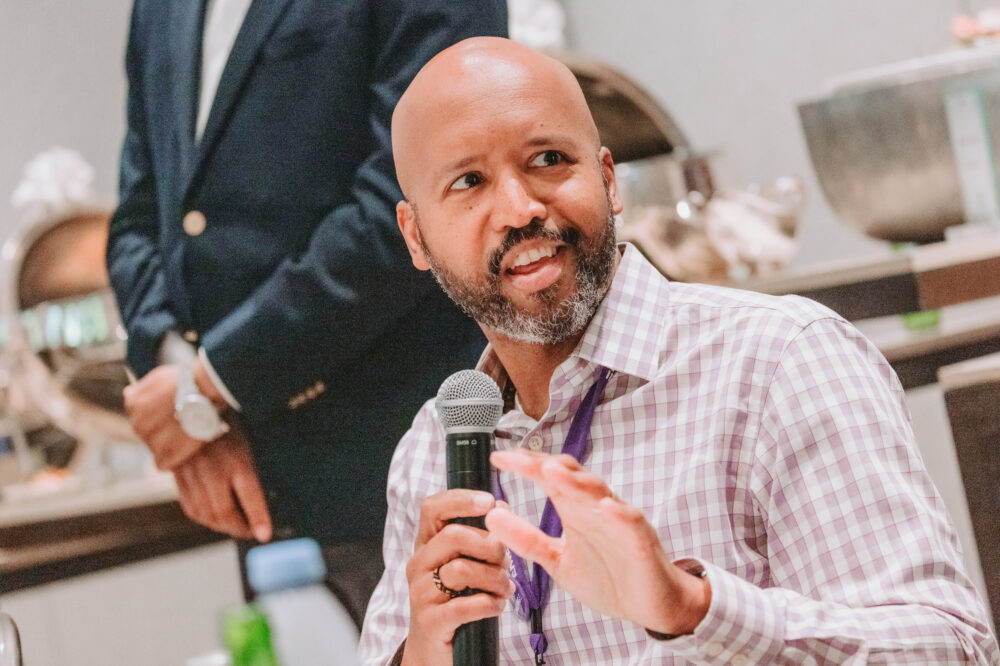
By Michael F. Thompson

Thursday, August 6, 2026
 From Surprise to Purpose: What My First EMERGE Taught Me About Financial Health for All—and for Each

I had heard EMERGE described as a place where leaders came together to advance financial health, yet I wondered: How could banking executives and human resource managers from some of the world’s largest financial institutions effectively collaborate with researchers and counselors from credit unions and nonprofits? Would there be a genuine commitment to improving the financial lives of everyday Americans, or opportunities to project social responsibility? 

By the end of my first EMERGE Financial Health, I was thrilled to discover that my doubts were unfounded. The people in that room—from opposite ends of the financial services spectrum—cared about financial health, listened across their differences, and were committed to building real solutions together. After three days, I came away energized and with a clearer sense of why I joined this field: Financial insecurity is a problem this community is dedicated to solving.

Unexpected Allies, Shared Purpose

Financial health champions are embedded within some of the largest banks and corporations—practitioners with concrete ideas for products and services that can meaningfully improve the financial lives of people in underserved communities. But they often work in isolation, sometimes navigating competing priorities with colleagues less focused on consumer financial health.

Quote

“What EMERGE does exceptionally well is pair people from large institutions with the resources and reach with people from nonprofits who have the mission and community trust but not the scale to drive impact.”

Meanwhile, nonprofit advocates are focused on the needs of consumers and households who are barely coping with saving and spending, borrowing funds for investments, and protecting their resources. These professionals are often navigating small budgets and limited scope.

What EMERGE does exceptionally well is pair people from large institutions with the resources and reach with people from nonprofits who have the mission and community trust but not the scale to drive impact. The coordination grounds what meaningful change in consumers’ lives would look like and how to make the business case for financial health.

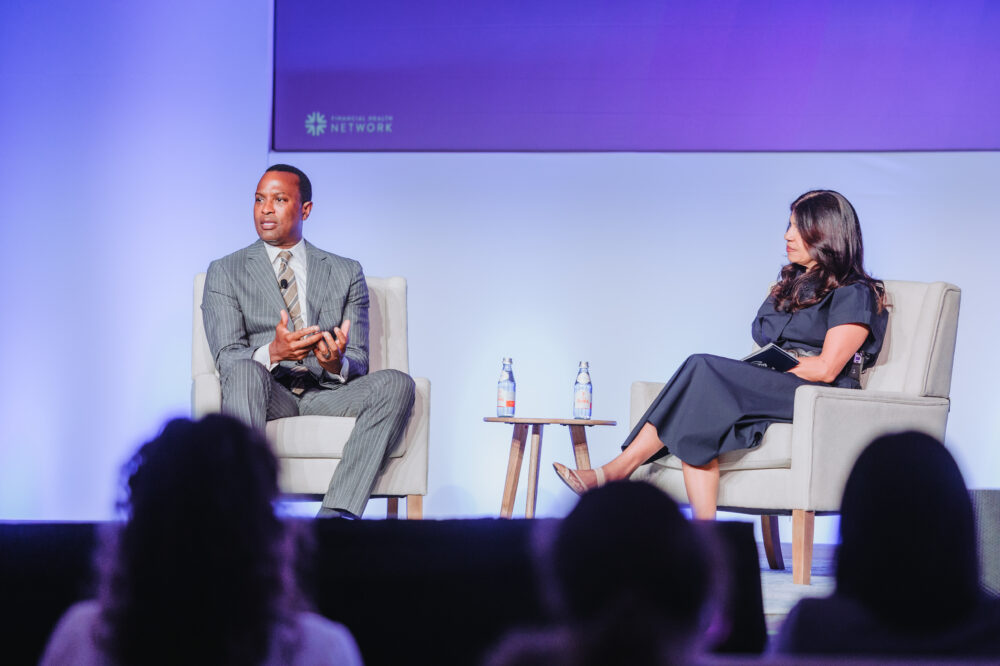
One compelling moment came following the session entitled “Atlanta Builds: When Innovation Meets Real Lives,” which included a discussion of the racial wealth gap. Hope Wollensack, founder and executive director of the Georgia Resilience & Opportunity Fund, explained that the ratio between white median wealth and Black median wealth is 46-to-1 in Atlanta. Later on, an executive from a major financial institution made the business case for addressing it. An estimated $40,000 in additional fees for a household living in an underbanked and segregated community could result in $360,000 in lost wealth over a lifetime—a loss absorbed not by the household but by the broader economy. This is the kind of idea exchange that happens when the right people are in the same room.

Designing for the Each, Not Just the All

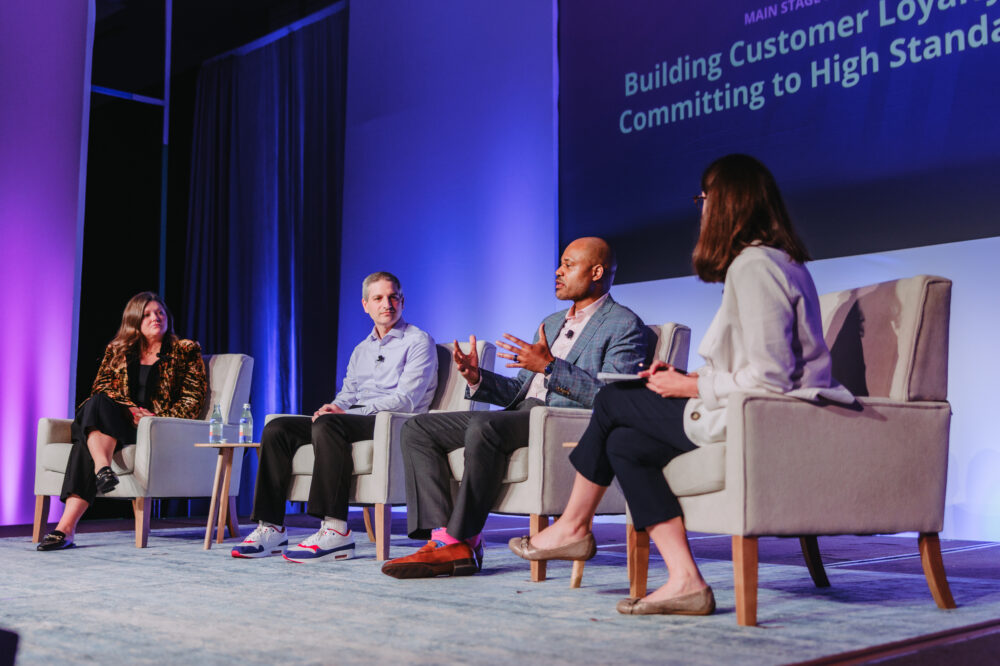
Financial health for all is our North Star, but the challenge is designing it for each to get us there. This point echoed throughout the conference, raised by Ajamu Kitwana, senior vice president and director of purpose and community at ESL Federal Credit Union, during the session, “Building Customer Loyalty by Committing to High Standards.” This conversation underscored that segmentation is not a marketing concept—it’s a measurement and equity challenge that recognizes that different communities face very different barriers. Some of these barriers include distrust rooted in discrimination, generational differences in financial capacity, as well as a lack of stability in the growing gig economy. So one-size-fits-all solutions are likely to fail underserved and increasingly vulnerable populations. 

Quote

“What became clear to me is that EMERGE is not just a conference—it is a well-engineered environment that produces the connections this movement needs.”

Federal Reserve Governor Michael Barr emphasized in his keynote session that 37% of households can’t cover a $400 emergency. Other sessions like “Beyond Banking: Emerging Innovations Redefining Financial Health” grappled with how much we still don’t understand about what access to financial services means today. Brandon Kelly, community reinvestment officer for Square Financial Services, shared that 25% of Cash App’s debit card users reported it was their first debit card. The “Building for All: Access is a Design Choice” session confronted the fact that noninclusive product design contributes to $800 million in unclaimed federal benefits every year. It was also exciting to see the innovation spotlights—showcasing solutions and responsibly leveraging AI—already bridging gaps in financial products, employer benefits, and community-based programs.

Michael McAfee, president and CEO of PolicyLink, issued a challenge in his keynote that stayed with me most: As the United States marks 250 years, how will we each adopt a founder’s mentality to build the financial system this country needs for its next 250 years? It reframed everything I had heard so far—the measurement problem is not a technical issue needing optimization, but a civic and moral calling. I’m heartened that a group of industry leaders has already committed to meet monthly to develop a shared framework for measuring financial health across institutions. That feels like founding work.

EMERGE as Social Infrastructure

What became clear to me is that EMERGE is not just a conference—it is a well-engineered environment that produces the connections this movement needs. The mix of mainstage sessions, breakout discussions, shared meals, and networking events created opportunities for unscripted, deep conversations that could form real alliances. Beyond sharing contact information, I had deep conversations with more than 45 people spanning banks, credit unions, fintechs, nonprofits, federal regulators, international organizations, academic researchers, and the Secretary-General of the UN’s office.

Quote

“…our most transformative connections come not from people we live and work with every day, but from people in different social worlds who see problems differently and can open us to new perspectives and opportunities.”

Sociologist Mark Granovetter showed that some of our most transformative connections come not from people we live and work with every day, but from people in different social worlds who see problems differently and can open us to new perspectives and opportunities. During a bus ride to an offsite event, I learned about the data resources of the World Council of Credit Unions. Following a panel, I met a financial health researcher who happens to live near me, a reminder that this community is both national and surprisingly close to home. At a table discussion, I heard the research that Stanford psychologist Jamil Zaki presented on empathy could reframe financial health empathy as a core value proposition. The connections made at EMERGE are how this field moves from identifying problems to building solutions, as well as alliances that endure.

What I'm Taking Into the Work

I came to EMERGE two months into a new role, bringing research experience across finance, technology, government, and academia—but still new to the financial health movement. I was uncertain whether a single conference could generate real momentum for improving consumer financial health. Through impactful ideas, motivating examples of success, and meaningful connections, I left inspired to be part of the generation of founders McAfee called us to become: people who can design a far more economically just nation for the next 250 years. 

As a research director, I learned that good research must grapple honestly with the measurement paradox: the people who most need a Financially Healthy system designed for their circumstances are the hardest to see in the data. 

I’m not discouraged. I’m part of a community that shares knowledge, builds consensus, and connects people to tangible results and solutions that work not just for all, but for each.

Explore EMERGE 2026 Sessions

Session  
EMERGE

Founders of the Next 250 Years

As the U.S. turns 250, think like a founder during this session on designing financial systems that earn trust, strengthen democracy, and endure for generations to come.
Written by