
Membership Amplification Toolkit
Resources to explore, leverage, connect, and broadcast your Financial Health Network Membership commitment to building better financial lives, together.

Protecting Patients from Medical Debt: Strategies for Hospitals & Health Systems
The COVID-19 pandemic magnified the interdependencies of health, financial health, and equity. Now, a recent White House Executive Order that directs federal agencies to lessen the burden of medical debt on American families highlights the responsibility of healthcare providers in protecting patients financially. Join us as we examine the challenges posed by medical debt and action items for hospitals and health systems to help fight this national crisis.

Financial Health Solutions: Promoting Employee Financial Health With a Mobile App
When offered digital financial wellness tools, which workers use them most? Explore how various employee groups engaged with a mobile app rolled out by University Federal Credit Union in Austin, Texas.
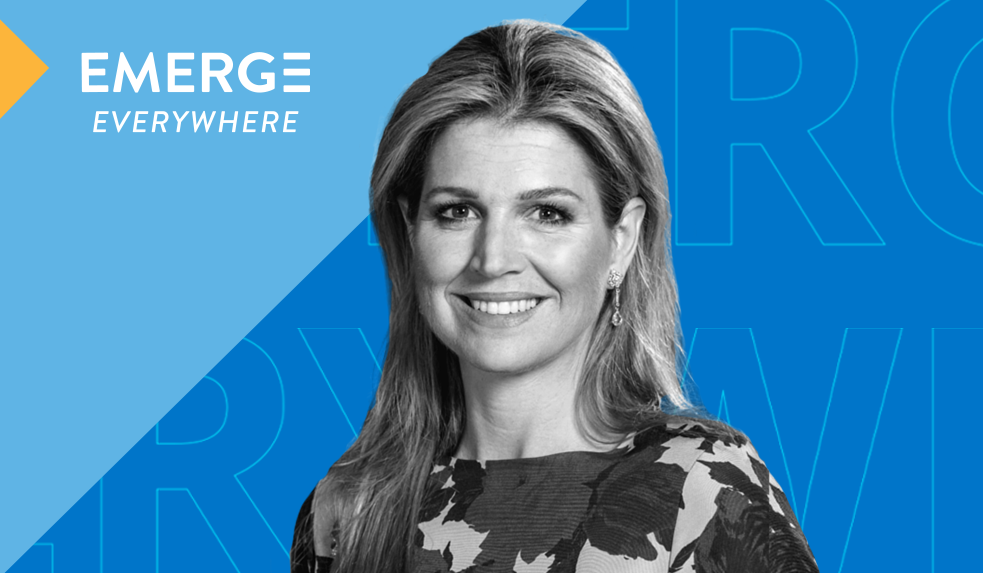
H.M. Queen Máxima of the Netherlands: Building a Financially Inclusive World
Her Majesty Queen Máxima of the Netherlands’ passion for financial inclusion began as a child in Argentina, navigating the impacts of hyperinflation on families and desire to act. In her role as the United Nations Secretary-General's Special Advocate for Inclusive Finance for Development (UNSGSA), she champions access to affordable and safe financial services for communities around the world, especially underserved groups. Through close collaboration with public and private sector partners, her work has driven real progress for financial health. In this episode of EMERGE Everywhere, learn more about Queen Máxima’s experiences, accomplishments, and vision for the future of financial inclusion and financial health.

The Role of Government Interventions in Financial Health: A Conversation with Foundation Communities
Andrew Dunn sat down with Kori Hattemer, Director of Financial Programs at Foundation Communities, a nonprofit organization that provides affordable housing in 23 communities in Austin and North Texas, on how pandemic-related government interventions are affecting recipients’ financial health.

EMERGE Workplace 2022
This event will explore the latest trends, strategies, and solutions for employers seeking to improve the financial health of their teams.

What the Financial Health Network and J.D. Power Know: Data Can Guide the Way for Financial Institutions to Improve Financial Health for Customers
Financial solutions aren’t one-size-fits-all. To solve finhealth challenges, it’s important to have a deeper understanding of customers’ financial health needs.

Brett King: The Future of Everything
Can we predict the future? Brett King believes he can. The self-proclaimed futurist is known for his ability to see the social and economic changes coming and the opportunities they will bring. In this episode of EMERGE Everywhere, Jennifer sits down with Brett to discuss his newest book, “The Rise of Technosocialism: How Inequality, AI and Climate Will Usher in a New World,” and how we can prepare ourselves to meet the most pressing challenges facing businesses and societies today.

Advancing Equity Through Worker Financial Health: A Framework for Employers
The Financial Health Network began conducting research in early 2021 to identify strategies employers can use to embed an equity lens into their benefits programs. HR leaders can use these early learnings to design and deliver programs and benefits that reduce financial health gaps among employees.

Pursuing Racial Economic Equity Through Purposeful Engagement
How can innovative investments and partnerships drive real economic change for communities in need? Fifth Third Bank recently announced the Accelerating Racial Equality, Equity, and Inclusion initiative, a $2.8 billion commitment to uplift historically marginalized people and communities. Today, in collaboration with Enterprise Community Partners, the bank is investing $180 million of that commitment in nine communities across its geographic footprint through the Neighborhood Investment Program. Hear from a panel of the project’s leaders about strategies to purposefully engage neighborhoods and local businesses, and find out what’s next for this initiative.

Consumers Balance Saving, Spending, and Earning in Uncertain Recovery: A Conversation With SaverLife
Helen Robb interviewed Tim Lucas of SaverLife about how consumers are balancing spending, savings, and earnings in the wake of the final stimulus payment.

FinHealth Goes Global
The handful of promising financial health efforts outside the U.S. have been isolated, lacking a centralized forum, practices, and priorities – until now.

Member Snapshot 2021: Assessing the Financial Health Maturity of Financial Institutions
Many financial services organizations in the United States are taking action to improve their customers’ and employees’ financial health. Through the Financial Health Maturity Assessment Program, this report assesses the survey responses of 43 Financial Health Network Members to identify key opportunities for financial institutions to advance their financial health strategies. Learn about the actions these Members are taking within each pillar and phase of the FinHealth MAP, and gain insights into the areas they still need to prioritize.

Consumer Data Sharing
Explore our research, best practices, and efforts to develop policy and industry-led solutions for consumer data sharing.

One Year into the Pandemic, Millions of Americans Still Struggling
Since the last Pulse survey in August 2020, more people are struggling to afford healthcare, which may lead to long-term health consequences beyond those created directly by COVID-19.

Non-Prime Tracker Report
Provided by Elevate Credit, this research discusses the trend of decreased household income for prime and non-prime folks alike since the pandemic began. With this trend continuing, this decrease is likely to manifest itself within holiday spending.

2020 U.S. Household Bill Pay Market Size & Category Breakout
Provided by doxo, this research reveals that Americans spend $2.75 trillion annually – over one fifth (21%) of all U.S. consumer spending – across 11 primary bill payment categories.

$600 Stimulus Check Impact Report
Provided by doxo, this research examines consumers' reactions toward the $600 stimulus checks they received from the U.S. federal government in 2020.

FinHealth MAP: Building a Business Strategy for Financial Health Impact
Achieving financial health impact doesn’t need to be a journey into the unknown. Learn how the Financial Health Network's FinHealth MAP can help guide your organization.

Financial Health Impact Lab: Innovation Highlights
Developing and testing innovative solutions is key to advancing financial health. That’s the driving force behind the Financial Health Impact Lab – a program that supports the groundbreaking work of organizations at the forefront of financial health measurement, like those profiled here.

Financial Health Solutions: Increasing Savings with a Choice at Onboarding
How can employers encourage workers to build their savings? Even, an employer-based earned-wage access platform, partnered with the Financial Health Leaders Lab to test the impact of presenting savings as an active choice during onboarding to its app.

Financial Health Solutions: Boost Savings with Challenges and Empowering Messages
How can competitions influence more people to build their savings? SaverLife, a nonprofit focused on helping working families to save and invest in their futures, partnered with the Financial Health Leaders Lab to test several approaches.

Workplace and Healthcare Leaders Join the Financial Health Network
We’re excited to welcome two experts to the team that will drive workplace and healthcare financial health strategies forward: Matt Bahl and Adrienne White-Faines.

Why Undocumented Workers Deserve to Be Included in the Social Safety Net
Lack of access to the social safety net has consistently hindered pathways to financial health for undocumented immigrants. Expanding eligibility for benefits to undocumented immigrants, during the pandemic and beyond, would increase financial stability for their families and most likely bolster the economy as a whole.

Balancing Today, Building Tomorrow: How Financially Coping Americans Plan, Save, and Invest
Even before COVID-19, millions of Americans were struggling financially, with more than half the population classified as Financially Coping. As job losses mount, savings are spent down, household debt grows, and investments shrink during the pandemic, Americans need financial support more than ever. This new research sheds light on how providers can support the saving and investing behaviors of Financially Coping consumers, ultimately improving both their immediate and long-term financial health.

70% of Americans say they are struggling financially
Many Americans remain in precarious financial shape even as the economy continues to grow, with 7 of 10 saying they struggling with at least one aspect of financial stability, such as paying bills or saving money. Read the Article >>

Cross-Sector Solutions: A Guide to Nonprofit-Fintech Partnerships
Learn best practices and real-life success stories from the Financial Health Network’s Nonprofit-Fintech Exchange, a marketplace for exploring collaboration and sharing insights on building high-impact partnerships.

Case Study: Developing a Survey to Track Financial Health for Global Customers
Financial Health Network Consulting Services worked with Discover to explore options for creating a comprehensive employee financial health platform.
Webinar: What Your Customers Actually Want: Customer Satisfaction and Financial Health
The last in a three-part series, this conversation explored the connections between financial health and metrics that define what it means to be competitive in the financial services ecosystem.

2018 Financial Health Leaders Spotlight: Simple
Listen in as we hear Simple share what it discovered after measuring its customers’ financial health and how that’s propelling Simple forward in 2019.
Webinar: Key Findings from the Pulse & What They Mean for Your Business
During this member-exclusive webinar, authors of the U.S. Financial Health Pulse 2018 Baseline Survey explored findings from this groundbreaking research initiative. The first in a three-part series, this conversation explored into new cuts of the data and shared findings and trends on how Americans are saving and borrowing.
2018 Financial Health Leaders Spotlight: FinFit
Listen in as we hear FinFit share how they think about the business case for financial health for employers and the impact they are seeing from the new FinFit IQ trivia game.

The Chatbots Are Coming!
By Tyler Griffin, Financial Health Network This post is a follow-on to our recently released FinLab Snapshot, a report in which we identified industry insights, trends and analyses based on FinLab’s 356 applicants in 2016. In this post, we’ll share more about something we called out as one of the “trends on the horizon” we…

That Moment You Measure What Matters
How to Value the True Cost of a Loan How should we measure the true value of a loan on consumers’ lives? Lower blood pressure, for the anxiety and stress saved? The dollar amount of an additional payday, because someone could afford to repair the car and get to work? The quality of life achieved…

Re-Defining an Awards Strategy: Opportunity Finance Network
By Financial Health Network Consulting Putting Low-Income Consumers First With the Help of Financial Health Network’s Knowledge More than 68 million low-income Americans don’t get the financial services they need. It’s this market gap that prompted the Opportunity Finance Network (OFN), a network of community development financial institutions to turn to the Center for Financial…