 Home
HomeBuilding What Doesn’t Exist Yet: A Conversation with Lara Hodgson
We sat down with Lara Hodgson, serial entrepreneur and co-founder of NowAccount and founder of ROX, ahead of her appearance at the Financial Health Network’s EMERGE conference in Atlanta, May 19–21, where she’ll join the “Innovation & Community Spotlight: What Works, What Travels” session. Here’s what she had to say.
By Financial Health Network
-
Program:
-
Category:
-
Tags:
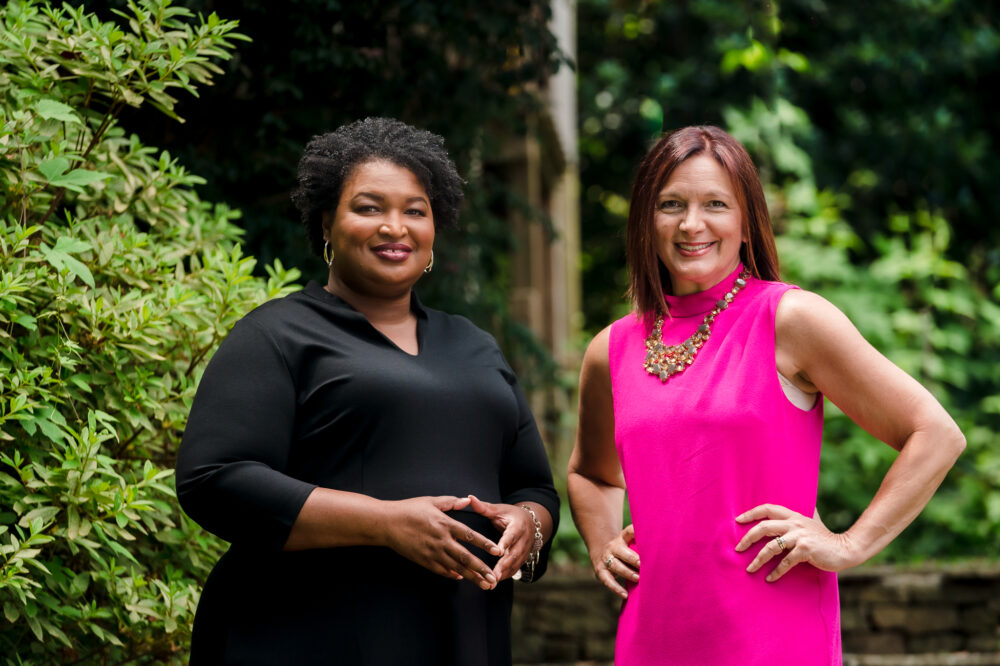
Serial entrepreneur Lara Hodgson is the co-founder of NowAccount and founder of ROX. She joins EMERGE 2026 for “Innovation & Community Spotlight: What Works, What Travels” taking place in Atlanta, May 19-21. This is an edited Q&A.
NowAccount grew out of a cash flow crisis you experienced firsthand as a small business owner. Now, with ROX, you’re building something new. What problem were you seeing that made you say, “This can’t wait”?
NowAccount started because of the pain we felt trying to grow our first company, Nourish. We landed large customers, shipped the product and then waited more than three months to get paid. We had revenue growth with no cash flowing in. Cash may be king, but flow is queen. You can’t grow a business without flow. Without cash coming in, we couldn’t pay our vendors to make more product. We were quite literally growing out of business instead of going out of business. So we created NowAccount to let small businesses get paid faster in a way that feels like accepting a credit card for payment.
But while building NowAccount, I kept hitting the same wall: the underwriting and monitoring process that determined which businesses we could serve was manual, inconsistent, and often biased. I saw clients we should have helped but couldn’t. I saw clients we took a chance on and who took advantage of us. That’s what led me to ROX, which is a tool that lets any lender or payment company gather everything they need on a customer with a single click, then applies AI to analyze the data and monitor for early warning signs. We have always believed that when you solve a problem, you can’t just solve it for yourself. You have to solve it for everyone who comes behind you.
How did you become business partners with former Georgia representative Stacey Abrams? What’s the lesson for a financial health community trying to build coalitions across sectors and ideologies?
Stacey and I met in the community leadership program Leadership Atlanta in 2004. In the opening session, she shared publicly for the first time that she wanted to be President of the United States. I was stunned. I had always said the same thing, and women just didn’t say that out loud. We ended up in the same study group, spent the year working through big societal challenges together, and came to deeply respect each other’s intellect and commitment to serving others.
What we discovered is that when we stayed focused on a goal bigger than either of us, our differences became a genuine advantage. There was her way, my way, and the best way, which was usually a combination of both. We’ve now started three companies together by leaning into the fact that we are opposites in almost every way. The lesson is when you keep your eye on the larger goal, differences are a huge asset. But when you lose sight of the goal and focus on the differences themselves, you start to judge and what was a strength becomes a liability.
You’ve said the key to entrepreneurship is “staying alive long enough to get lucky.” What does responsible scaling actually look like in practice?
I mean it completely. Every “overnight success” is just the last chapter of a book with 10 earlier chapters about being a few dollars away from game over. Luck only finds you if you give yourself the runway to recognize and act on opportunities when they appear.
What keeps that runway open is staying open-minded and that requires managing one’s ego. Too many entrepreneurs anchor their identity to their product. When you do that, you stop listening. But when you anchor your sense of purpose to the impact of what you’re building—your “so what” rather than your “what”—you stay genuinely curious, and opportunities don’t pass you by.
The other thing I’ve learned is that as a founder, you are almost always the limiting factor. At some point, growth requires you to build a team, trust them, and let them drive while you stay focused on strategy and clearing obstacles. Most founders resist that transition. But it’s the only way to build something that lasts beyond you.
AI and emerging tools are putting the ability to build in more hands than ever before. What’s your advice to the builders who are at that early stage right now?
It has never been easier to build something and that’s both a gift and a trap. The gift is that you can create, get feedback, and adjust faster than ever. The trap is that the ease of building erodes the patience to listen first. Before AI, the cost of building forced discipline: you had to be sure you’d identified a real problem before turning on the gas. Now you have to impose that same discipline yourself.
I also want to say something about pivoting, because the word gets misused constantly. A pivot isn’t just changing direction—it’s rotating around a fixed point. You have to define your true north, the thing that cannot change no matter how much you adjust course. Without that fixed point, you’re not pivoting. You’re wandering.
And finally, as everyone rushes to use AI, I believe the ultimate winners will be the ones who figure out how to bring humanity back into their business. The more we automate, the bigger the vacuum in genuine human connection becomes. The builders who design for that from the start are the ones who will still be standing when the dust settles.