Blog

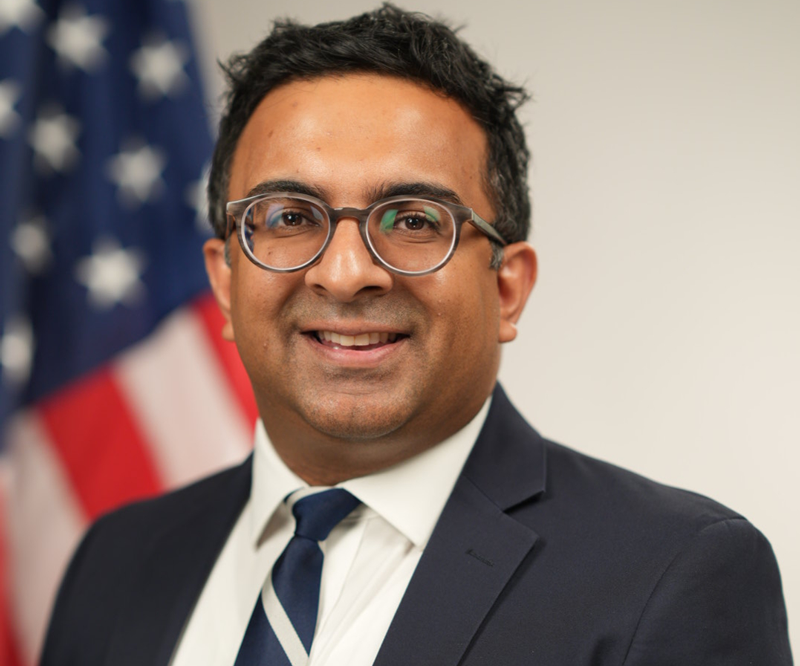
Asad Ramzanali: Guardrails to Make AI Work for the People

We sat down with Asad Ramzanali—who has worked on AI policy at the White House, on Capitol Hill, and now at Vanderbilt University—ahead of his appearance at the Financial Health Network’s EMERGE conference in Atlanta, May 19–21, where he’ll moderate the panel “AI That Works for People: Guardrails for Financial Health.” Here’s what he had to say.

By Financial Health Network

Friday, April 17, 2026
 Asad Ramzanali: Guardrails to Make AI Work for the People

Asad Ramzanali has worked on AI policy at the White House, on Capitol Hill, and now at Vanderbilt University. He joins EMERGE 2026 to moderate the panel “AI That Works for People: Guardrails for Financial Health.” This is an edited Q&A.

What made you want to focus on where AI meets people’s financial lives?

Money drives so much of how people live—what they think about, the source of their stress, and even how they dream. That’s why financial technologies matter. AI is a particular set of technologies that can make financial products more efficient by reducing the cost and expanding access while also accelerating and locking in harms that have long plagued financial services in the U.S., like discrimination and unequal access. It’s not one or the other; both are happening.

Too often, we treat technological developments and their effects on society as inevitable—something we all just have to accept. But these outcomes aren’t predetermined. Choices about how AI is developed, when and whether it’s deployed, and how policymakers govern it are being made right now, often without meaningful public input or consideration for its societal impact. That’s exactly why conversations like this one matter.

What’s something AI is already doing in financial services that most people don’t realize—for better or worse?

AI has been quietly embedded in financial services for years, but one aspect many people underappreciate is the dual role it plays in fraud. AI-enabled monitoring tools are used by nearly all financial services providers to detect and combat fraud. But AI is also enabling new forms of fraud—from more sophisticated social engineering to personalized phishing and even deepfake audio and video impersonations. It’s a bit of a cat-and-mouse game, and too often consumers are left holding the bag. As AI-generated fraud grows more sophisticated, the question of who bears responsibility when an AI system fails to catch an AI-powered scam will get murkier.

You’re moderating the panel on AI guardrails. Without giving too much away, what’s the one debate you’re most looking forward to pushing your panelists on?

I’m most interested in exploring where AI is or might soon improve outcomes for people in demonstrable ways, where it’s being sold as transformative but is really just legacy harms with better marketing, and where it is entrenching harm. It’s important for all of us—policymakers, market participants, and those in civil society—to continually move past the hype and analyze how these developments actually affect people’s financial lives.

If someone in the audience works at a bank, a fintech, or is a regulator—what’s the one thing you want them thinking about as they prepare to engage with each other at EMERGE?

Come ready to be honest, not just optimistic or pessimistic. What could go wrong and what could go right as various forms of AI are deployed across the financial services ecosystem? Where are policies well calibrated to address risk and harm, and where are they falling behind? And what, if anything, does AI actually enable that is genuinely transformative in financial services? Those are the questions I want people sitting with when they walk into that room.