 Home
HomeNavigating Nonprofit Work in Uncertain Times: Ori’s Story
Working at a nonprofit was a dream come true for Ori, until funding cuts put her job and personal finances on shaky ground.
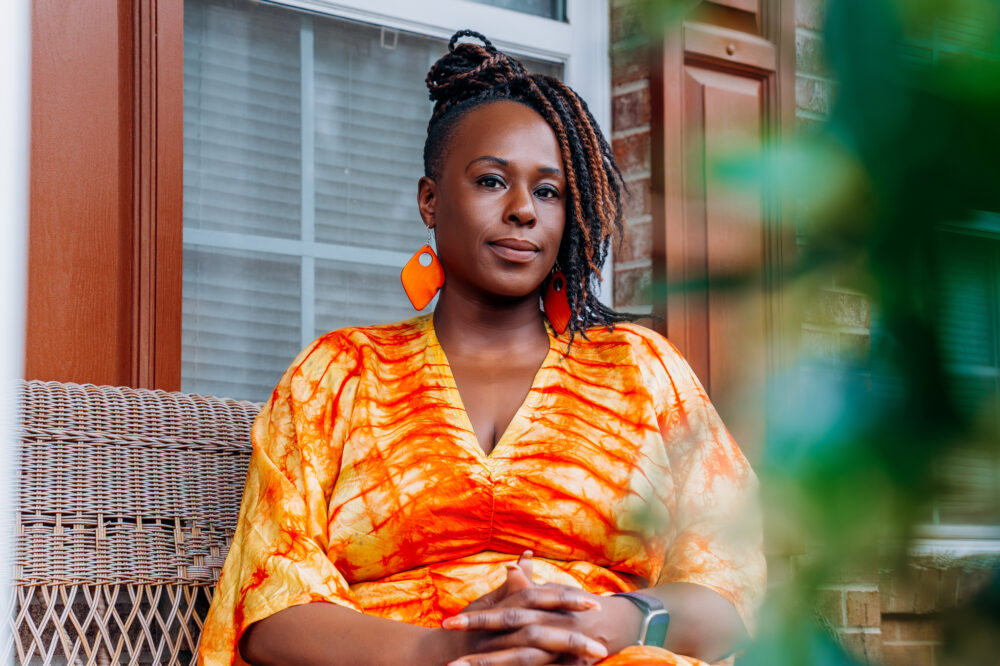
When Ori Ukuku received a job offer from Hand, Heart, + Soul Project, a nonprofit that helps children and families access nutritious food, she felt both excitement and relief. After years working at an early childhood education center that mostly served affluent families, the role offered something she had long hoped for: the chance to work with communities like the one she grew up in.
The offer also came at the end of eight months of unemployment, giving her a welcome reprieve from mounting financial worries. As one of the 20 million Americans who serve as an unpaid caregiver, Ori was comforted that she would be able to support her parents financially if they lost access to Social Security or Medicaid.
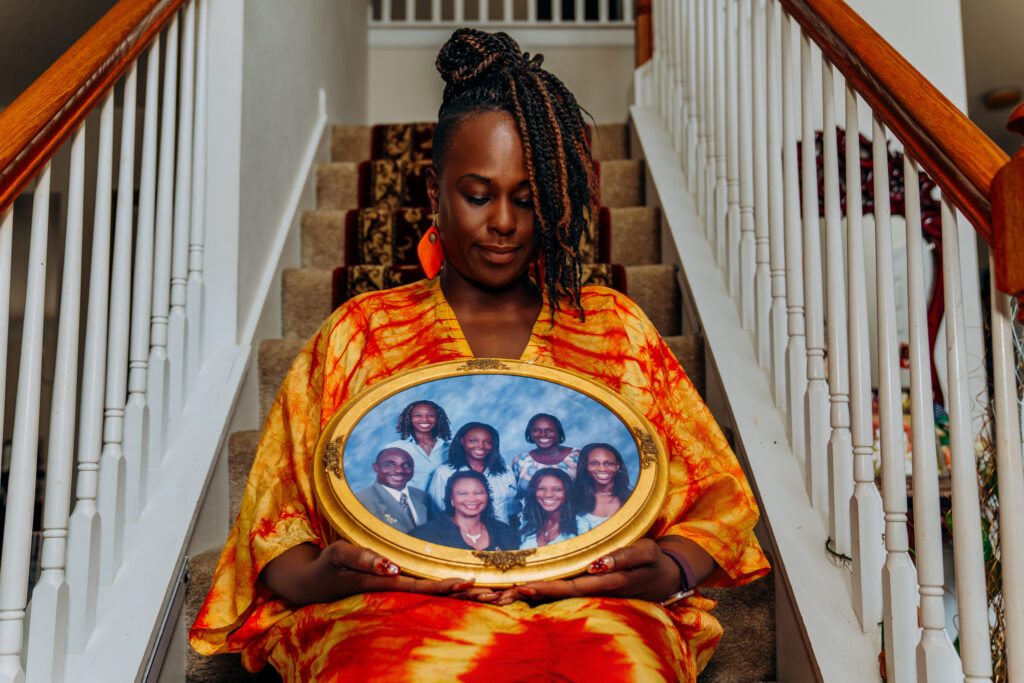
Ori already supports her parents as an unpaid caregiver, but unemployment made her worry she wouldn’t be able to support them financially if there was an emergency.
45-year-old Ori, who lives in Atlanta, Georgia, thrived in her new role. She started working part-time and was quickly promoted to a full-time position overseeing a team of contractors. But that stability was short-lived. Federal budget cuts soon strained her small nonprofit, limited the services her team could provide, and threatened Ori’s newfound financial security. The nonprofit’s staff quickly dropped from eight to four full-time workers after a combination of layoffs and voluntary exits.

“When I started looking for contract work, I just wanted a safety net. I didn’t really think of it as adding more to my plate. A lot of my friends have multiple jobs and multiple streams of income.”
Ori’s experience reflects a broader pattern across the nonprofit sector. Recent Financial Health Network research shows that only 27% of workers at nonprofits with budgets under $1 million are Financially Healthy, compared with 45% of workers in organizations with a budget over $25 million. As government funding contracts and economic uncertainty continues, many nonprofits are struggling to do more with less—compromising their ability to drive impact and the financial health of workers like Ori.

Federal budget cuts put Ori’s job security in question, making her feel less financially stable.
The benefits give me a great sense of peace. When I wasn’t working, I was like, “Okay, I can’t get sick. Okay, let me not travel just in case something happens to me.” But now, if I have the sniffles, I know I can jump online and do a virtual visit. I’m not living in perpetual fear anymore.

Having health benefits means Ori can afford to see a doctor when she needs to, allowing her to live life less fearfully.
Facing Funding Uncertainty
We started talking about budget cuts in August 2025. September 30 being around the corner had me and my coworkers worried about whether we would have a job.… I was trying to remain calm, so my team would remain calm as well. It wasn’t until closer to the end of September where we learned that they were doing away with two leadership positions.
Cuts have meant more work for me and my team. Just because it’s fewer members doesn’t lessen the amount of work that we have.
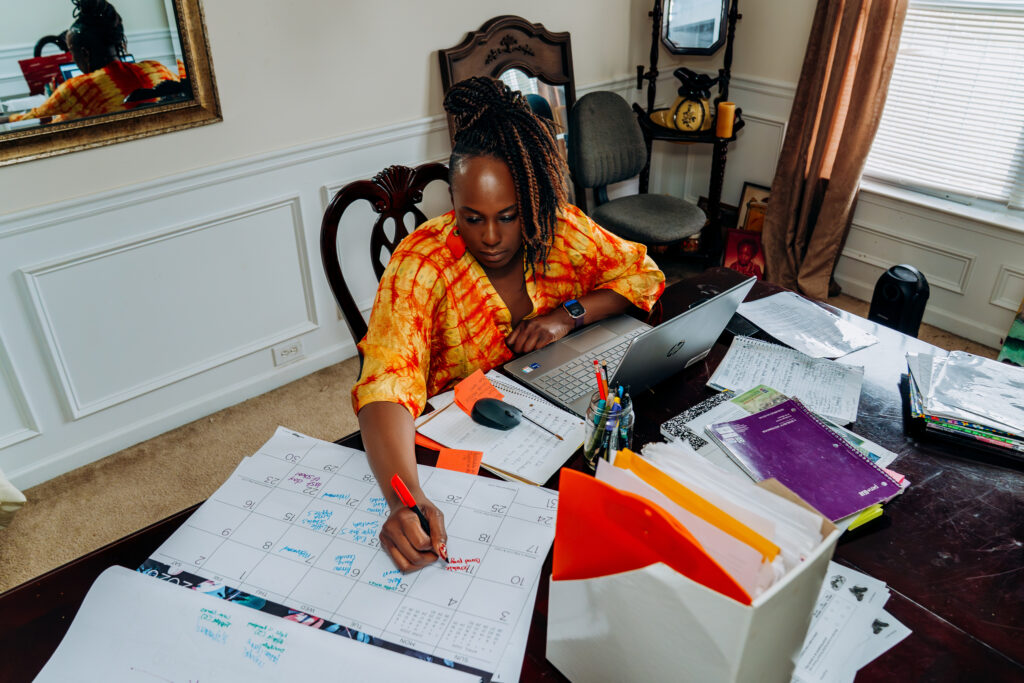
As a team leader, budget cuts mean that Ori has to work harder while also providing emotional support to her team.
We’re still trying to put on a happy face when we’re out in the field. But when we’re not on the field, it’s a lot of putting out little fires. Trying to calm the team down, trying to make sure fear doesn’t jump from one person to the next. “Let’s talk about it, but let’s not lead in fear. Let’s walk in what we have.”
We’re not able to go into schools as much as we were before. We used to go weekly to all 16 sites we serve. Right now, we’re going bi-weekly; sometimes, it feels like we’re only in a school once a month. And that’s just because we don’t have the manpower. That’s been difficult, because we love going to the schools.
-
Budget cuts have prompted Ori to build up her savings.

-
Taking on a side hustle helps bolster Ori's income and creates a safety net in case of future layoffs.

-
Ori is spending less on things like entertainment, impacting her social life.

We’re still looking for ways to be in the community. We have started to do newsletters with the schools, trying to engage the families and keep them interested, and give them and the teachers activities that they can do with the children on the weeks we’re not there.
Adapting To a New Reality
I do fear that, with the instability of the government, anything can happen. It has caused me to start putting more money into my retirement, to start making little cuts in my personal life.
I picked up some contract work with an online company. When I started looking for contract work, I just wanted a safety net. I didn’t really think of it as adding more to my plate. A lot of my friends have multiple jobs and multiple streams of income. So I just looked at it as putting on my big girl pants and looking for a solution.
Before, I wasn’t so budget-oriented in my personal life, because I always had a stream of income coming in. But my brother-in-law has been helping me work more on budgets and actually sticking to them. I didn’t realize how much I used to spend on entertainment, so that’s been a big change. Socially, I’m not outside as much as I used to be.
“They can still live alone, but I’m looking at the possibility of moving back in with them and helping them a little bit more.”
My parents are getting older, so I’m their caretaker as well. I take them to the doctor every week. Tuesday, Wednesday, and Thursday are doctor visit days. They can still live alone, but I’m looking at the possibility of moving back in with them and helping them a little bit more. This job has also been a blessing—I’m able to take my laptop with me when they have appointments. I’m grateful to be able to be hybrid and work for an organization that understands what they need comes first.
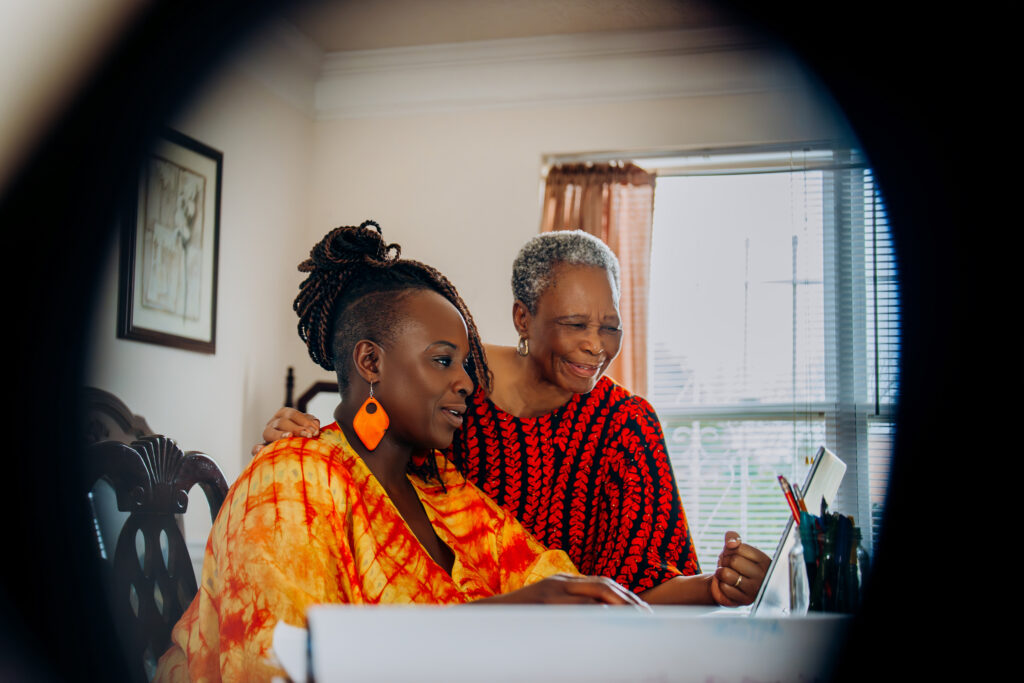
Working hybrid means that Ori can provide the caregiving that her parents need to be healthy.
I’m not worried about layoffs right now. But if you ask me that question next week, it may change. Right now, knowing the different funding sources we have coming in right now, I feel okay. Now, do I feel okay past September 30th of next year? I’m probably like 80/20 on that. Will they renew SNAP? Will they take that away from us again? That always plays in the back of my mind.
Budget cuts have not changed how I feel about nonprofit work at all. A lot of that has to do with coming from the education world—I never chose the big bucks. It actually makes me want to find other strands of funding and ways that we can bring awareness to the importance of our organization, so we’re not so dependent on government funding. It lights a fire under me.
There are days when I just want to sit in a corner and cry. But I’m also very thankful that I do have something right now. I still have hope, I still want to push the work that we’re doing forward, and I’m still joyful about it.
-
Funding uncertainty at work has put Ori's financial stability at risk, but she isn't giving up.

In the United States, over 12 million nonprofit workers power classrooms, clinics, food banks, and other community services across the country. But tight budgets and funding uncertainty restrict the help nonprofits can give, while pushing many nonprofit workers into financial distress.
Ori’s full benefits package puts her ahead of many other nonprofit workers. Research shows that only 52% of nonprofit workers have access to all four “core” benefits—paid time off, sick leave, retirement plans, and health insurance—while 1 in 7 didn’t have access to any benefits. Demographic divides are also evident: Black women like Ori who work in a nonprofit are less likely to be Financially Healthy than their white or male peers.
Like Ori, many workers are starting to pick up extra jobs to shore up their finances. These so-called secondary nontraditional workers, or workers who pick up side work in addition to a full-time job, struggle more often with their financial health. One Financial Health Network survey found that these workers were significantly more likely than traditional workers to report that one of their top financial goals was “just getting by.”
Despite these pressures, nonprofit workers like Ori continue to show up for the communities that depend on them. But sustaining this workforce can’t rely on personal sacrifice alone. Employers, grantmakers, and policymakers all have a role to play. Investing in higher wages, stronger benefits, and stable funding streams can give nonprofit workers the security they need to serve others and build financial health for themselves.
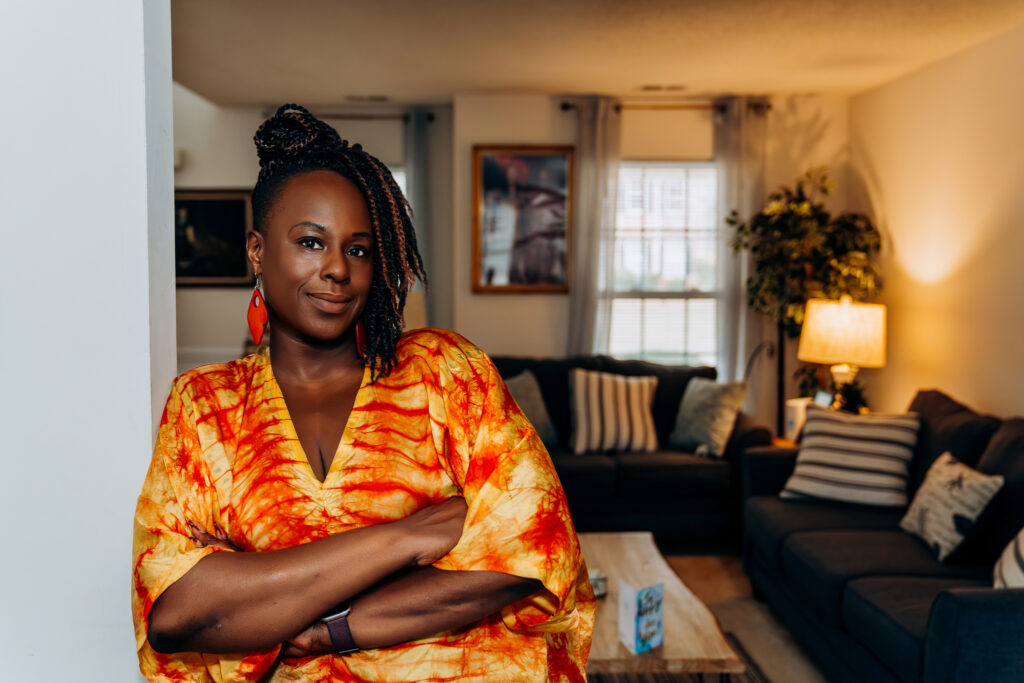
Nonprofit workers like Ori deserve more than just getting by; higher wages, stronger benefits, and stable funding streams can help.
Read More Human Stories
The Real Cost of Being a Black Entrepreneur: Wande’s Story
As a nonprofit co-founder, Wande is confronting funding inequities head-on while building an organization that puts community and workers first.

From Poverty to a College Degree: Angel’s Story
Without a financial safety net, one college graduate’s journey to a diploma was paved with setbacks and plenty of resolve.
Still Striving for Financial Independence: Becky’s Story
Entering adulthood has come with ‘curveballs’ that her parents never faced, and an increasingly uneven playing field to catch up.
Explore More Research

The Financial Health of Nonprofit Workers
America’s 12 million nonprofit workers play a vital role in our economy, yet many lack the job benefits needed to support their financial health.

Pulse Points: Main Gig or Side Hustle? Nontraditional Work and Financial Health
More than 1 in 10 working adults holds a nontraditional job. How is this growing and diverse sector of the American economy faring financially?

Essential Benefits: Paid Family Leave
With more workers balancing jobs and caregiving, offering paid family leave can help employers support worker well-being and key business outcomes.