 Home
HomeWhen Financial Abuse Breaks a Family: Elizabeth and Linda’s story
Two sisters recount how their mother’s decline and exploitation shattered their financial security and devastated close-knit family bonds.
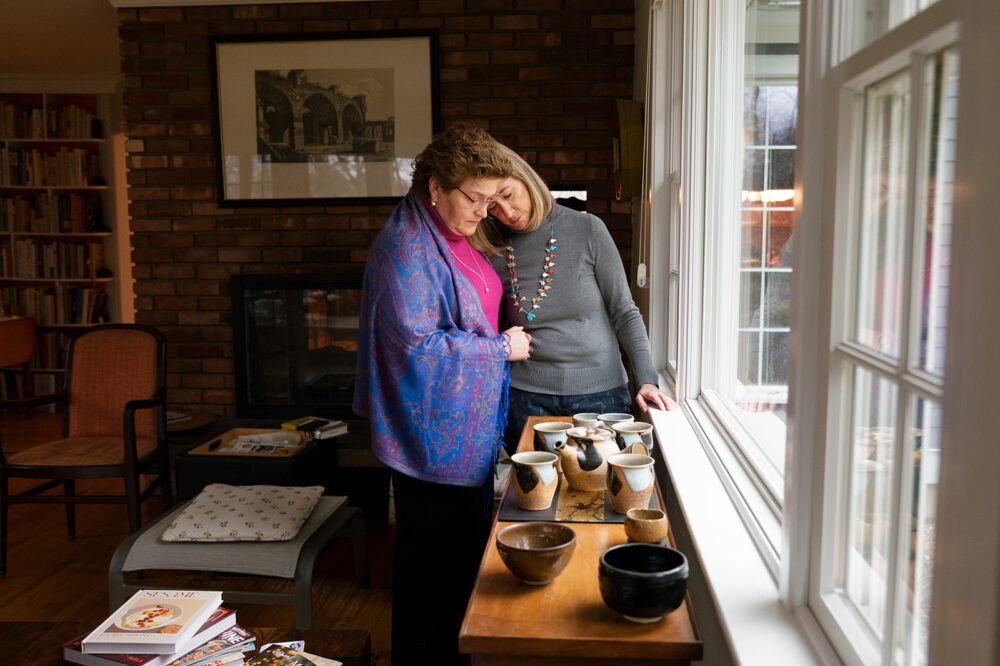
This story is sponsored by AARP.


“We believe our mother was manipulated into signing over both her assets and control of her life to a man younger than her [own] daughters.”
What began as a trusting relationship with a neighbor took a turn into something much darker. A stranger living next door to their mother at her second home spent months befriending her, ultimately taking over her finances prior to the pandemic and selling off the family’s real estate assets. Their mother’s cognitive decline made it easier for her neighbor to take advantage of her financially, Linda and Elizabeth believe.
The Baer sisters have spent years fighting in court, only to find that the legal system offers little recourse for families whose loved ones fall prey to financial exploitation while still appearing competent, especially when a person claims they are acting of their own accord.
“Some people with dementia can carry on like someone who doesn’t have any cognitive issues,” Elizabeth says. “And we really believe that our mother suffered from this, because we were a close and loving family. And, you know, for her to have fully cut ties from everyone she loved really stretches the bounds of credulity.”
“We believe our mother was manipulated into signing over both her assets and control of her life to a man younger than her [own] daughters,” Elizabeth adds.

The sisters believe that their mother signed over her financial assets to a stranger due to undiagnosed cognitive decline.
For Linda and Elizabeth, the loss has been both personal and financial. Their parents’ savings, built through generations and managed by their mother after their father passed away in 2014, were supposed to provide a cushion to Linda and Elizabeth as the sisters aged. Instead of high-paying careers, both went into public service work–Linda, 58, a public health professional, and Elizabeth, 61, a schoolteacher–envisioning stability well into old age.
Now, as both look toward retirement, everything has changed. Linda, who lives outside of Boston, has continued working to save for her later years. Elizabeth, who lives in Lenox, Massachusetts, quit her full-time job due partly to the emotional fallout of what they have endured, but continues to tutor and work independently.
As financial scams grow more sophisticated and widespread, families like the Baers are left to pick up the pieces. Fraud losses rose 33% between 2023 and 2024, according to FBI data, and older adults are particularly at risk for greater losses. Fraud robs households of more than their savings; it undermines the security, independence, and future they’ve often spent a lifetime building. For the Baer sisters, speaking out about their experience has become both a form of healing and of public service—helping others dealing with the same devastation and calling for system-wide protections to combat the rapid rise of financial abuse.
It is important to note that cognitive decline is not the reason scams succeed in many cases. The growing sophistication of scams run by transnational crime syndicates rely on a playbook that bypasses logic entirely to force immediate action. This is referred to as the “amygdala hijack” and threatens the financial security of all demographics, particularly older adults who hold much of the wealth in the US, according to AARP.
Here’s their story.
The Fallout
A mother in isolation. “During COVID-19, our mother’s neighbor took complete control over all modes of communication, though we did not realize it at the time. In doing so, he was able to manipulate any connection with us and other people, essentially cutting us off from her. Later, he took over her finances. We petitioned for guardianship through the courts, but were unsuccessful,” Elizabeth says.

Elizabeth and Linda faced both emotional and financial fallout after their mother severed ties with the family.
A sobering development. “We realized she was experiencing some cognitive decline, but it was too late,” Linda says. “She was always a quirky kind of person, and when we experienced it, we thought ‘Oh, this is Mom being Mom’ as opposed to, ‘Maybe this is a problem.’ What happened to our mom was not a typical type of dementia, but surely a signal that her mental capacity had changed, and her decisions started to become less and less her own.”
When the Safety Net Disappears
Rethinking stability. Even with enough financial stability to avoid immediate crisis, the experience upended the family’s sense of security and left them deeply shaken. “Our grandparents on our father’s side left assets to my parents, and then some to Linda and me,” Elizabeth says. “I felt very fortunate and very lucky that I had that. At the same time, there was never a month that I didn’t spend more than I earned, because I knew that I had assets to fall back on. I never expected that to disappear because of a change in our mother. Because now I’m in my early 60s and wondering how long my money has to last. Who knows?”
An uncertain financial future. “It has definitely changed how I will live the rest of my life,” Elizabeth says. “I was divorced when my children were 7 and 9, and I was not getting much from child support. It really wasn’t easy. And there were so many times that my parents said to me, ‘You know, we don’t have the cash flow to help you a lot now, but don’t worry, when we’ve passed, we have these real estate properties that have value—and don’t worry that you’re not putting money into a 401(k).”
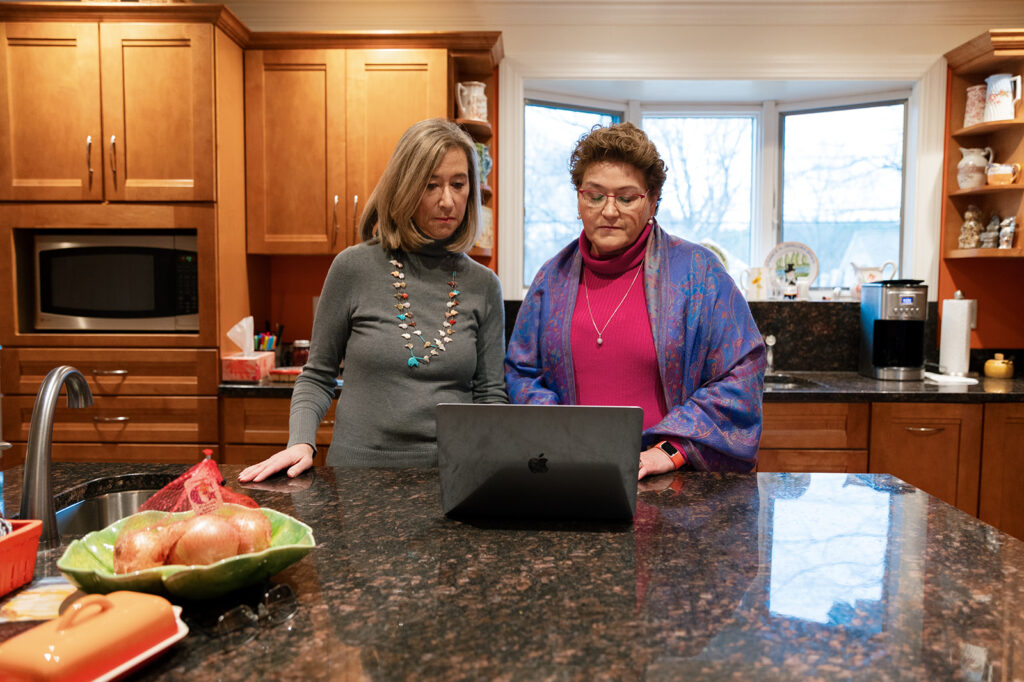
Elizabeth, on the left, and Linda are both working to regain their financial footing.
An anxious retirement. “I’m wondering what things are going to cost over the next 20 plus years and feeling like I have to be more careful about what I spend. Things like home repairs make me nervous. And my hopes of traveling are now far from reality,” Elizabeth says.
Working to regain a financial foothold. “I am working to make sure that I can have enough to cover whatever health expenses are coming my way,” Linda says. “And for somebody who has lived almost their entire life with Type 1 diabetes, I know I’m going to need healthcare. And I know it’s only getting more expensive and harder to get.”
A call for new policies and practices. “There is such an emphasis on personal autonomy in our society, but it does a disservice when someone gets ill and can rearrange their finances and everything they’ve intended to pass on to their children. I don’t want my children to suffer even a fraction of what we’ve suffered, but we need safeguards in place to accomplish this,” Elizabeth says.
Turning Pain into Purpose
Rethinking generational wisdom. Like many other members of the sandwich generation, Linda is navigating shifting financial realities in the longest stage of parenthood. “My 22-year-old is right out of college and earning an entry-level salary, but my husband and I insisted on them opening a 401(k). We tell them that you need to give a portion of your earnings for your retirement. You need to think about it now. When I was that age, I thought there would be something, if I needed it, that could cushion any shortfall,” Linda says.
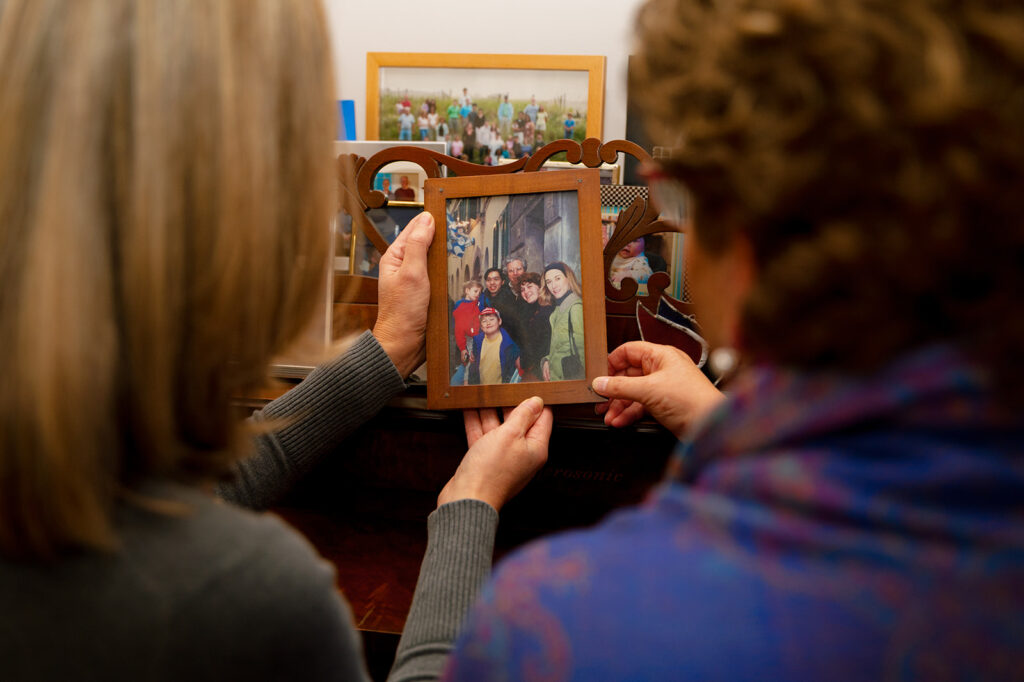
“What happened to our mom was not a typical type of dementia,” says Linda of their loving mother.
A breakdown in trust. “Aside from my one child, is there somebody else that I could trust to somehow hand everything over to? And they would still make sure that I was cared for? I don’t have any solutions,” Linda says.
Speaking out. “If there’s any good that can come out of it, it’s to help other people in similar situations [see] that they’re not alone and know that there are things potentially that may help you. And if you can understand early enough, you may be able to change the course of things. Maybe. In our case, there’s nothing left of the person that we knew,” Linda adds.
No way to say goodbye. “We have no contact with our mother,” Elizabeth says. “We think we know where she is and we think she’s alive, but we have no independent confirmation of either of those things. I totally accept the fact that you never know what can happen, but this was outside of anything I could have ever imagined.”
-
Linda and Elizabeth are no longer in touch with their mother, but continue to share their story in hopes of helping other families.

For the Baer sisters, the growing challenges of achieving a secure retirement collided with the ease with which exploitation can happen in our current financial system. Their experience shows how fragile intergenerational financial security becomes when families aren’t protected by stronger systems.
Dementia-related financial losses often begin years before a formal diagnosis. “Before the Diagnosis: Dementia’s Early Financial Toll,” a report by AARP and the MIT AgeLab, shows that there are many ways that cognitive decline triggers wealth loss. For instance, missed payments, declining credit scores, and major drops in household net worth can happen well in advance of symptoms being recognized.
For families like the Baers, these health changes can bring on financial strain, tipping them from long-term stability to financial insecurity well into their later years. Today, roughly 55% of working adults are concerned about being financially insecure in retirement, with one in four people who are at retirement age not having savings at all, according to Financial Health Network research.
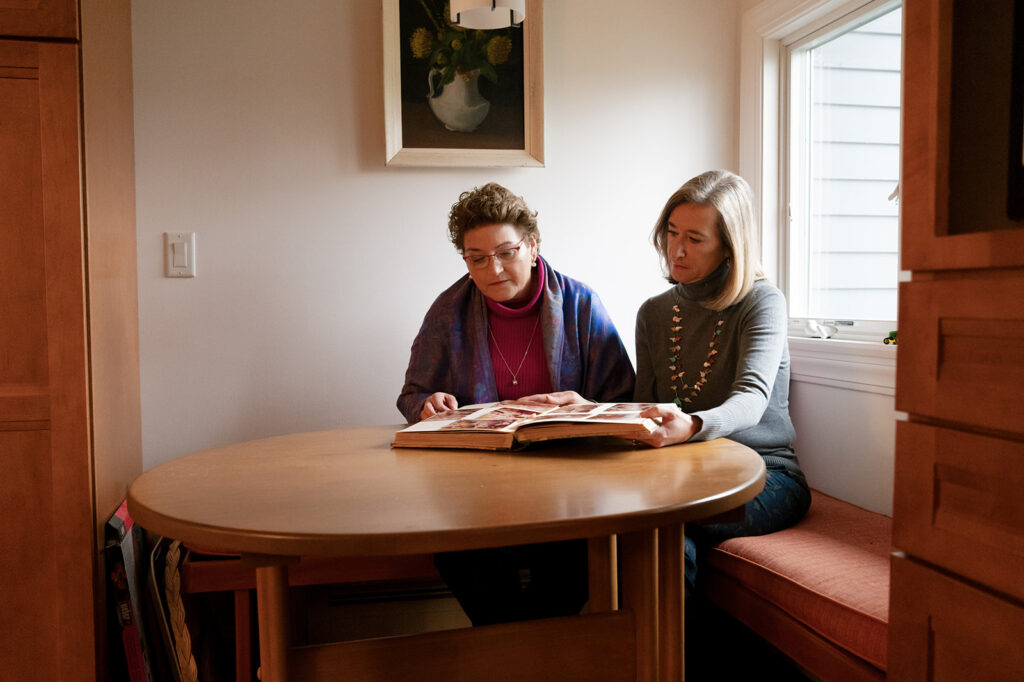
Linda, left, and Elizabeth look through family photos.
Financial Health Network research on intergenerational financial health also shows how families need tools to manage finances collaboratively, though only 20% of checking accounts allow people to add trusted contacts to enable safe monitoring of finances or spot potential fraud. Yet those solutions are only one piece of the puzzle: In the Baer sisters’ situation, Linda was suddenly removed as her mother’s trusted contact, which they suspect was due to pressure from her mother’s neighbor. Support systems like elder protection, affordable care, stronger paid family leave policies, and even more transparent financial tools are all essential elements for addressing financial abuse.
Currently, these financial losses limit economic mobility, slow asset building, and undermine generational wealth with consequences that ripple across families and the broader economy. Protecting older adults requires a coordinated cross-sector approach that includes social media, telecommunications, law enforcement, policymakers, and financial institutions. That means improving consumer and professional education (including offering enhanced training for financial professionals through initiatives like AARP’s BankSafe), normalizing and making opportunities for early diagnosis and detection more accessible, and strengthening security practices to stay ahead of potential threats.
“I’m wondering what things are going to cost over the next 20 plus years and feeling like I have to be more careful about what I spend. Things like home repairs make me nervous.”
Read More Human Stories
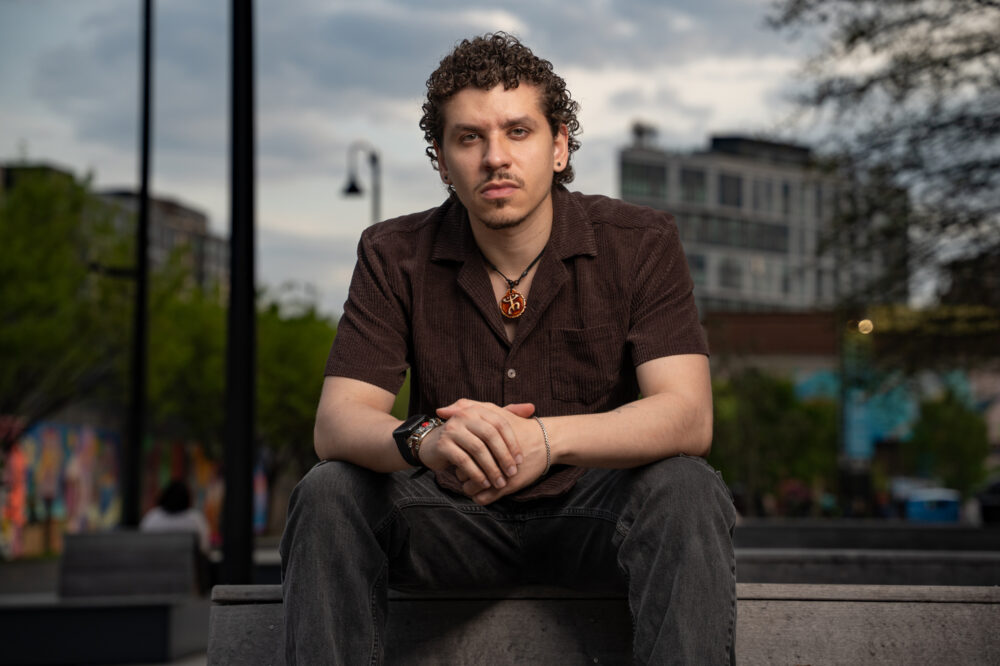
From a Challenging Childhood to a Chosen Family: Yousef’s Story
On his own earlier than planned, 30-year-old Yousef faces a catch-22: not enough education for stable work, not enough savings for more education.
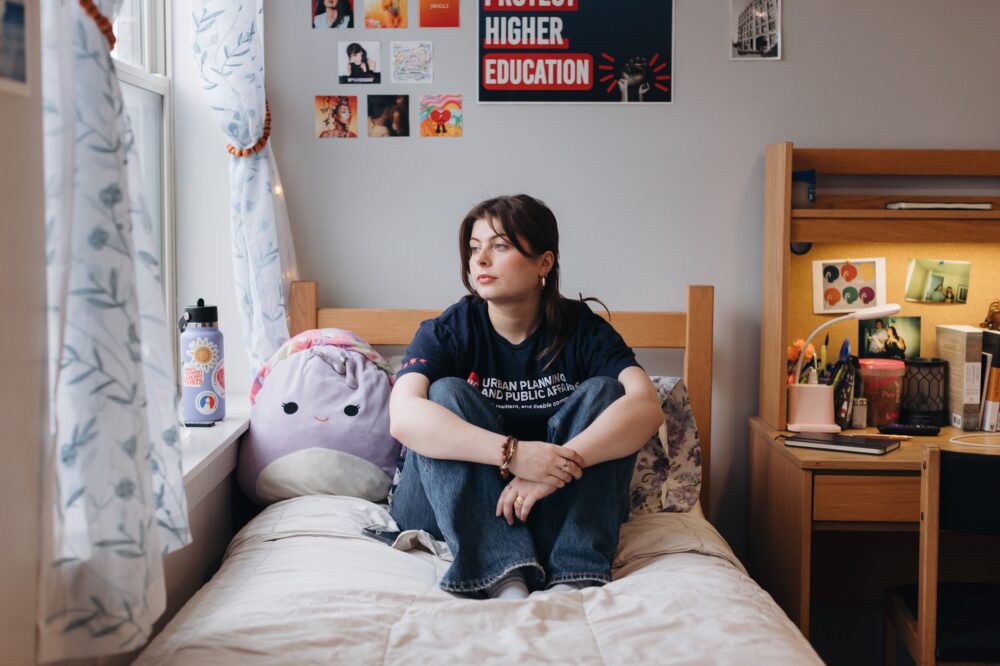
When Economic Strain Sparks Dreams of Policy Change: Margarita’s Story
Growing up in an economically diverse city showed Margarita, now a college junior, how place shapes financial destiny.
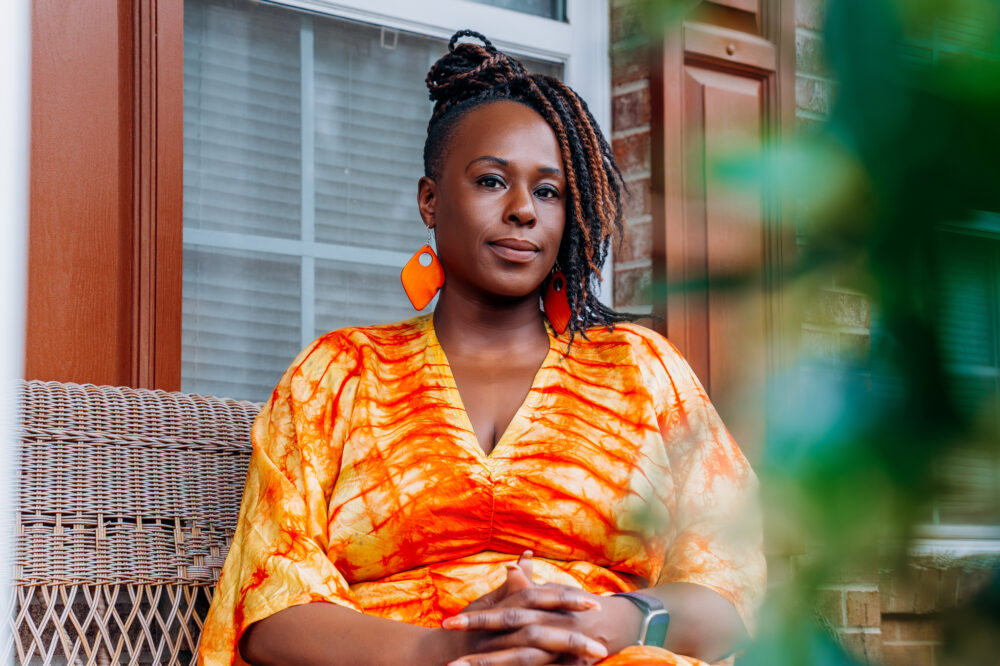
Navigating Nonprofit Work in Uncertain Times: Ori’s Story
Working at a nonprofit was a dream come true for Ori, until funding cuts put her job and personal finances on shaky ground.
Explore More

Prolonged Parenting in an Era of Extended Longevity
Article #1 in the Series | As lifespans evolve, parents’ involvement in their adult children’s lives is changing. Explore the implications of “prolonged parenting” and the shifting financial needs of parents.

Why Scam Protection Must Be Part of Financial Health Conversations
Fraud and scams cost Americans billions each year and undermine financial security and trust. Combating this crisis requires cross-sector collaboration, education, and innovative defenses.

The State of Retirement Security in America
Americans across all income levels are struggling to save enough for a financially secure retirement. What’s driving retirement insecurity, and how can employers help?